A 28-year-old woman comes to the physician because of a low platelet count incidentally discovered on routine blood work. She was recently seen by a psychiatrist for depression. She admits to depressed mood, easy fatigability, insomnia, and feelings of worthlessness for the past 6 months. She denies any history of bleeding problems. She does not take any medications, including herbal products or dietary supplements. She denies recent travel, vaccinations, or infections. She does not use tobacco, alcohol, or illicit drugs. She is not currently sexually active and denies ever being pregnant. There is no family history of bleeding disorders or cancer.
Her vital signs are within normal limits. Complete physical examination is unremarkable.
Laboratory results are as follows: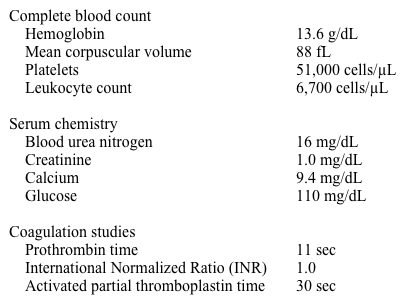
Peripheral blood smear shows thrombocytopenia, giant platelets, and an absence of platelet clumping. Red and white blood cell morphology is within normal limits.
Testing for HIV is negative.
Which of the following is the most appropriate next step in management for her thrombocytopenia?
A) Anti-platelet antibody testing
B) Bone marrow biopsy
C) Oral corticosteroids
D) Observation and laboratory follow-up
E) Splenectomy
Correct Answer:

Verified
Q399: An 80-year-old man admitted to the hospital
Q400: A 71-year-old woman comes to the physician
Q401: A 75-year-old man has a 3 month
Q402: A 40-year-old woman comes to the physician
Q403: A 63-year-old man comes to the office
Q405: A 60-year-old man comes to the office
Q406: A 65-year-old woman comes to the physician
Q407: A 23-year-old African American man returns to
Q408: A 60-year-old immigrant from India comes to
Q409: A 28-year-old woman comes to the physician
Unlock this Answer For Free Now!
View this answer and more for free by performing one of the following actions

Scan the QR code to install the App and get 2 free unlocks

Unlock quizzes for free by uploading documents