A 38-year-old man comes to the physician with intermittent abdominal pain for several months. The pain is in the epigastric area and is often worse with food intake. He has tried over-the-counter antacids and H2 blockers with minimal relief. He reports occasional nausea but denies vomiting, hematemesis, or melena.
His past medical history is significant for asthma diagnosed 2 years ago, for which he uses an albuterol inhaler. Two months ago, he was hospitalized for pneumonia and asthma exacerbation and was treated with steroids and antibiotics. The patient immigrated to the United States 5 years ago from Laos. He does not use tobacco, alcohol, or illicit drugs. He denies HIV risk factors and known exposure to tuberculosis.
His temperature is 36.7 C (98 F) , blood pressure is 122/70 mm Hg, and pulse is 77/min. Physical examination is unremarkable.
Laboratory results are as follows: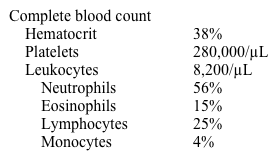
Serum chemistry and liver function tests are normal. Chest CT is unremarkable. Two stool samples for ova and parasites are negative.
What is the best next step in management of this patient?
A) Bone marrow biopsy
B) Celiac disease antibodies
C) Serology for Helicobacter pylori
D) Serology for parasitic infection
E) Skin testing for Aspergillus
Correct Answer:

Verified
Q473: A 57-year-old woman returns to the physician
Q474: A 35-year-old man underwent PPD/TST (tuberculin skin
Q475: A 37-year-old man comes to the office
Q476: A 42-year-old man comes to the physician
Q477: A 55-year-old businessman comes to the physician
Q479: A 64-year-old man with a history of
Q480: A 50-year-old man comes to the physician
Q481: A 44-year-old man with HIV infection is
Q482: A 50-year-old man comes to the physician
Q483: A 47-year-old previously healthy man comes to
Unlock this Answer For Free Now!
View this answer and more for free by performing one of the following actions

Scan the QR code to install the App and get 2 free unlocks

Unlock quizzes for free by uploading documents