A 52-year-old man comes to the physician with a week of pain and discoloration of his fingers. He has had profound fatigue and diffuse arthralgias for the past 6 months. He denies weight loss, fever, chills, hematuria, cough, hemoptysis, or shortness of breath. He has a history of asthma, intravenous drug abuse, depression, and peptic ulcer disease. He smoked 2 packs per day for 20 years but quit 10 years ago. He drinks occasionally but has not used intravenous recreational drugs for more than 10 years. He works as an auto mechanic.
On examination, the right hand appears as shown below. The remainder of the physical examination is unremarkable.
Laboratory results are as follows: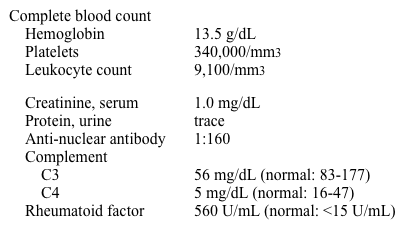
Chest x-ray shows no infiltrates or cardiomegaly.
Which of the following is the most likely diagnosis?
A) Buerger's disease
B) Cholesterol emboli syndrome
C) Churg-Strauss syndrome
D) Hepatitis C infection
E) Primary Raynaud's phenomenon
Correct Answer:

Verified
Q829: A 32-year-old woman comes to the physician
Q830: A 35-year-old immigrant from Eastern Europe comes
Q831: A 65-year-old man comes to the physician
Q832: A 55-year-old man comes to the physician
Q833: A 65-year-old man comes to the physician
Q835: A 55-year-old man comes to the office
Q836: A 52-year-old man with a history of
Q837: A 66-year-old woman comes to the physician
Q838: A community-dwelling 80-year-old patient comes to the
Q839: A 53-year-old seamstress comes to the physician
Unlock this Answer For Free Now!
View this answer and more for free by performing one of the following actions

Scan the QR code to install the App and get 2 free unlocks

Unlock quizzes for free by uploading documents