A 68-year-old woman comes to the office due to worsening pain and stiffness in her hands for the past several months. The patient initially had pain in the fingers and at the base of the thumb only after prolonged gardening or sewing, but she is now having difficulty with daily activities such as buttoning her blouse or holding her dog's leash. Her fingers are stiff in the morning, with gradual improvement after 15-20 minutes of use. The patient has experienced no fever or swelling in the hands. She has attempted treatment of her pain with stretching exercises and over-the-counter acetaminophen without relief. Medical history is notable for hypertension, for which she takes amlodipine and lisinopril. The patient occasionally drinks alcohol but does not use tobacco or illicit drugs.
Vital signs are within normal limits. Hand examination shows no redness, swelling, or joint deformities, but passive and active range of motion elicits pain at the proximal and distal interphalangeal joints. The remainder of the examination is normal.
X-ray of the patient's hand is shown in the exhibit.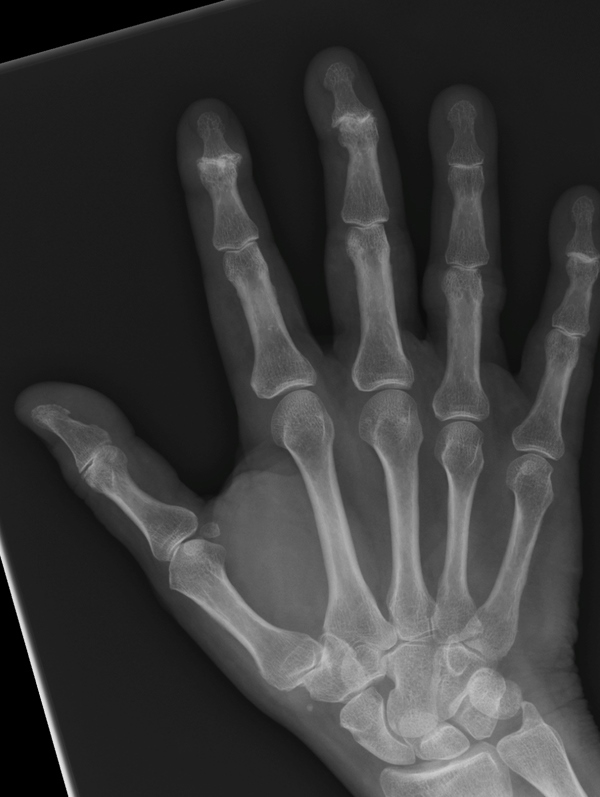
Which of the following is the most appropriate next step in management of this patient's symptoms?
A) Daily oral naproxen
B) Glucosamine supplement
C) Low-dose prednisone
D) Serology testing
E) Topical diclofenac
Correct Answer:

Verified
Q890: An 18-year-old woman comes to the office
Q891: An 85-year-old woman comes to the office
Q892: An 80-year-old woman comes to the office
Q893: An 80-year-old man comes to the office
Q894: An asymptomatic 85-year-old woman is brought to
Q896: A 34-year-old man comes to the office
Q897: A 37-year-old woman comes to the physician
Q898: A 38-year-old woman comes to the office
Q899: You are about to see an 80-year-old
Q900: A 32-year-old physician approaches a colleague and
Unlock this Answer For Free Now!
View this answer and more for free by performing one of the following actions

Scan the QR code to install the App and get 2 free unlocks

Unlock quizzes for free by uploading documents