A 66-year-old man is hospitalized for elective surgical repair of an abdominal aortic aneurysm. The patient has had midabdominal and low back pain due to an enlarging infrarenal aortic aneurysm. Medical history also includes hypertension and prolonged tobacco use. Preoperative cardiopulmonary examination is normal, and blood cell counts and serum chemistry studies are within normal limits. During the surgery, prolonged clamping of the infrarenal aorta and iliac arteries is required due to complex aneurysm anatomy, but there are no other intraoperative complications. The patient's postoperative laboratory results are as follows: 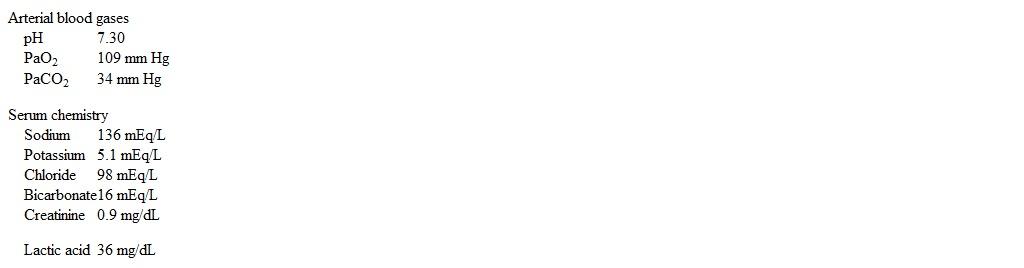 Over the next several hours, which of the following changes is most likely to occur in this patient in response to the acid-base imbalance?
A) Decreased central respiratory drive
B) Decreased renal carbonic anhydrase activity
C) Decreased urinary titratable acid excretion
D) Increased urinary ammonium excretion
E) Increased urinary chloride reabsorption
Correct Answer:

Verified
Q503: A 4-year-old boy is brought to the
Q504: A 58-year-old man is evaluated for hypertension
Q505: A 34-year-old woman with chronic pelvic pain
Q506: A 36-year-old woman undergoes an abdominal hysterectomy
Q507: A 65-year-old man comes to the emergency
Q509: A 25-year-old man comes to the office
Q510: A 68-year-old man with no previous history
Q511: A 64-year-old man comes to the office
Q512: A 56-year-old man comes to the emergency
Q513: A 62-year-old woman comes to the office
Unlock this Answer For Free Now!
View this answer and more for free by performing one of the following actions

Scan the QR code to install the App and get 2 free unlocks

Unlock quizzes for free by uploading documents