A 60-year-old man comes to the emergency department due to fever, burning on urination, generalized body aches, and lower abdominal discomfort. The dysuria began 3 days ago, and the remainder of the symptoms developed within the last 24 hours. The patient also has been unable to urinate for the past 18 hours. He has a history of hypertension, hyperlipidemia, coronary artery disease, and benign prostatic hyperplasia. Medications include aspirin, metoprolol, atorvastatin, lisinopril, and tamsulosin. He is not sexually active. The patient does not use tobacco, alcohol, or illicit drugs and has no medication allergies. Temperature is 38.3 C (100.9 F) , blood pressure is 130/75 mm Hg, pulse is 105/min, and respirations are 16/min. Abdominal examination reveals mild lower abdominal tenderness with no costovertebral angle tenderness. The urinary bladder is palpable in the hypogastric area. Rectal examination reveals a swollen, tender, and enlarged prostate with no palpable nodules. The genitals are normal in appearance and nontender to palpation. Laboratory testing shows a leukocyte count of 12,500/mm3 with 85% neutrophils and an elevated serum creatinine at 1.3 mg/dL (last known value: 0.9 mg/dL) . Microscopic urinalysis results are as follows: 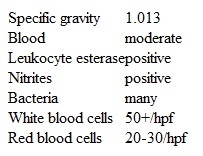 Which of the following is the best next step in management of this patient?
A) 5-alpha-reductase inhibitor and empiric antibiotics
B) Bladder decompression and empiric antibiotics
C) CT scan of the abdomen and pelvis
D) Prostatic massage with prostatic fluid analysis
E) Transrectal ultrasound of the prostate
Correct Answer:

Verified
Q631: A 4-year-old girl is brought to the
Q632: A 7-year-old boy is brought to the
Q633: A 15-year-old boy is brought to the
Q634: A 46-year-old man comes to the office
Q635: A 64-year-old man comes to the physician
Q637: A 63-year-old African-American male presents for the
Q638: A 55-year-old man comes to the office
Q639: A 46-year-old man comes to the office
Q640: A 26-year-old woman comes to the office
Q641: A 14-year-old boy is brought to the
Unlock this Answer For Free Now!
View this answer and more for free by performing one of the following actions

Scan the QR code to install the App and get 2 free unlocks

Unlock quizzes for free by uploading documents