A 72-year-old woman is found to be severely short of breath at her skilled nursing facility. The patient was recently hospitalized for vertebral osteomyelitis and discharged 2 weeks ago to complete a 6-week course of piperacillin-tazobactam via a peripherally inserted central venous catheter. Her dyspnea began only with exertion but is now also present at rest. Medical history includes coronary artery disease with ischemic cardiomyopathy, chronic obstructive pulmonary disease, and chronic kidney disease. She has had 2 hospitalizations for heart failure over the last year; noninvasive positive-pressure ventilation was required. Paramedics observe the patient to be obtunded with agonal respirations and rales throughout the bilateral lung fields. Oxygen saturation is 72% on room air. She is intubated and transferred to the emergency department. On arrival, the patient is minimally responsive to stimuli. Temperature is 36.7 C (98 F) , blood pressure is 115/65 mm Hg, and pulse is 110/min and regular. The patient's oxygen saturation is 88% on 100% inspired oxygen. BMI is 19 kg/m2. The trachea is midline. On physical examination, rales are heard on the right side and markedly decreased breath sounds on the left side of the chest. S3 is heard. There is 2+ bilateral peripheral edema. A chest x-ray reveals the following: 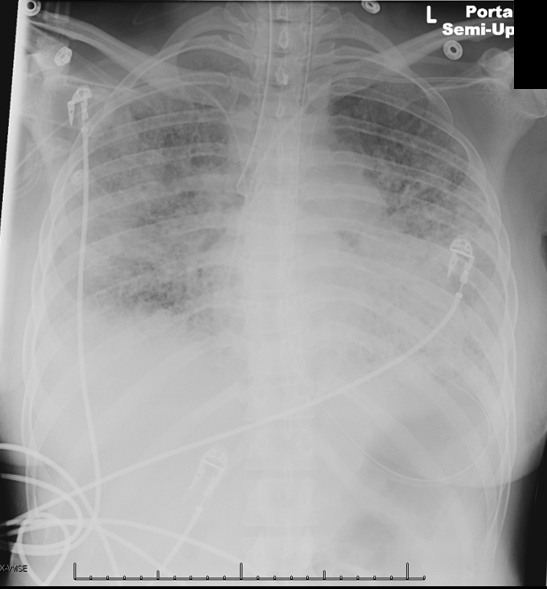
Which of the following is the most appropriate next step in management of this patient?
A) Insert a chest tube on the left side
B) Obtain a chest CT scan with contrast
C) Perform needle decompression on the left side of the chest
D) Retract the endotracheal tube approximately 3-5 cm
E) Start an infusion of dobutamine
Correct Answer:

Verified
Q923: A 6-month-old boy is brought to the
Q924: A 60-year-old man with a history of
Q925: A 67-year-old man comes to the emergency
Q926: A 10-year-old boy is brought to the
Q927: A 60-year-old Caucasian male presents to your
Q929: A 27-year-old man comes to the emergency
Q930: A 6-year-old girl is brought to the
Q931: A 73-year-old man comes to the emergency
Q932: A 6-month-old boy is brought to the
Q933: A 27-year-old man comes to the emergency
Unlock this Answer For Free Now!
View this answer and more for free by performing one of the following actions

Scan the QR code to install the App and get 2 free unlocks

Unlock quizzes for free by uploading documents