A 21-year-old man arrives at the emergency department after experiencing dizziness and extreme fatigue for several days. For the past two weeks, the patient has been drinking a lot of water and urinating more than usual. He experienced nausea and vomiting a day ago and has struggled to keep food and liquids down since then. There are no other medical conditions or medications that the patient is taking. The blood pressure is 90/60 mm Hg, the pulse is 120 beats per minute, and the respirations are 20 bpm. Urinalysis reveals glucose and ketones. The patient is given intravenous fluids as well as an intravenous infusion of recombinant human insulin that has not been modified in any way. When his condition has stabilized, the insulin infusion is stopped and the same insulin formulation is given subcutaneously. Which of the following drug concentration curves is most likely to be obtained after the subcutaneous insulin injection? 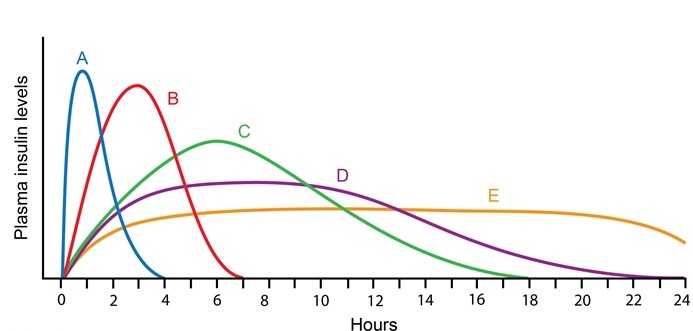
A) A
B) B
C) C
D) D
E) E
Correct Answer:

Verified
Q133: A 25-year-old man is brought to the
Q134: A 58-year-old woman comes to the emergency
Q135: The insulin concentration in the pancreatic veins
Q136: A 7-year-old boy is brought to the
Q137: A 53-year-old man comes to the office
Q139: An 8-year-old boy is brought to the
Q140: A 50-year-old man comes to the physician
Q141: A 18-year-old man suffers from chronic atopic
Q142: A 44-year-old woman comes to the physician
Q143: An 72-year-old man is brought to the
Unlock this Answer For Free Now!
View this answer and more for free by performing one of the following actions

Scan the QR code to install the App and get 2 free unlocks

Unlock quizzes for free by uploading documents