







 Chat with AI

Deck 4: ATI-TEAS-Science
 Free Deck
 Full screen (f)
 Free Deck
 Question

Question
Question
Question
Question
Question
Question
Question
Question
Question
Question
Question
Question
Question
Question
Question
Question
Question
Question
Question
Question
Question
Question
Question
Question
Question
Question
Question
Question
Question
Question
Question
Question
Question
Question
Question
Question
Question
Question
Question
Question
Question
Question
Question
Question
Question
Question
Question
Question
Question
Question
Question
Question
Question
Question
Using the provided image, choose the anatomical structure designated by letter B.
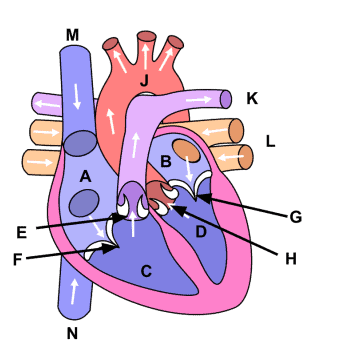
A)Right atrium
B)Right ventricle
C)Left ventricle
D)Left atrium
A)Right atrium
B)Right ventricle
C)Left ventricle
D)Left atrium
Question
Question
Question
Question
Question
Question
Question
Question
Question
Question
Question
Question
Using the provided image, choose the anatomical structure designated by letter J.
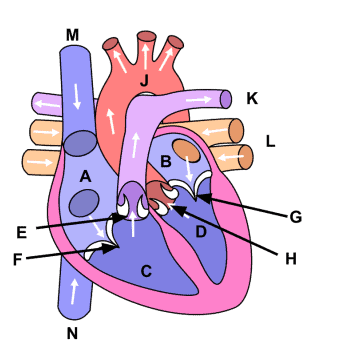
A)Pulmonary Artery
B)Pulmonary Vein
C)Aorta
D)Superior Vena cava
A)Pulmonary Artery
B)Pulmonary Vein
C)Aorta
D)Superior Vena cava
Question
Question
Question
Question
Question
Question
Question
Question
Question
Question
Question
Question
Question
Sign Up to check this deck
already have account? log in
1/405

Play


Full screen (f)
Deck 4: ATI-TEAS-Science
1
Isotopes are __________.
A)versions of one element with a different number of protons
B)special orbitals in metal elements
C)versions of one element with a different number of neutrons
D)types of valence shells
A)versions of one element with a different number of protons
B)special orbitals in metal elements
C)versions of one element with a different number of neutrons
D)types of valence shells
versions of one element with a different number of neutrons
Isotopes are variants of an element where the number of neutrons are different from a normal atom of that particular element. All isotopes of an element will have the same number of protons (changing the number of protons would change the element), but will have different numbers of neutrons in each isotope. For example, Carbon-14 is an isotope of Carbon. A "normal" carbon atom would have 6 protons and 6 neutrons. Carbon-14 has 6 protons and eight neutrons.
Isotopes are variants of an element where the number of neutrons are different from a normal atom of that particular element. All isotopes of an element will have the same number of protons (changing the number of protons would change the element), but will have different numbers of neutrons in each isotope. For example, Carbon-14 is an isotope of Carbon. A "normal" carbon atom would have 6 protons and 6 neutrons. Carbon-14 has 6 protons and eight neutrons.
2
Which of the following lists the respiratory passageways in order from largest diameter to smallest diameter?
A)Trachea, bronchi, bronchioles
B)Bronchioles, bronchi, trachea
C)Trachea, bronchioles, bronchi
D)Bronchi, trachea, bronchioles
A)Trachea, bronchi, bronchioles
B)Bronchioles, bronchi, trachea
C)Trachea, bronchioles, bronchi
D)Bronchi, trachea, bronchioles
Trachea, bronchi, bronchioles
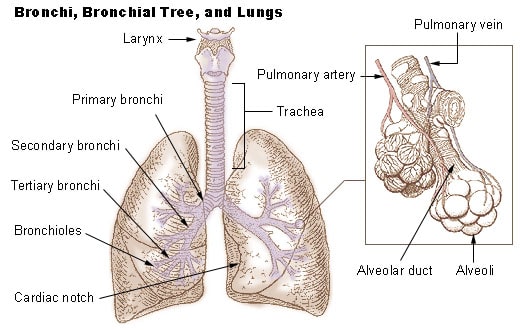
The trachea is the largest airway of the lower respiratory system and is composed of a single tube. It splits into two smaller tubes, a left and right bronchi. These bronchi further split into small bronchioles.
You may use the diagram below as a visual reference for the respiratory passageways.
The trachea is the largest airway of the lower respiratory system and is composed of a single tube. It splits into two smaller tubes, a left and right bronchi. These bronchi further split into small bronchioles.
You may use the diagram below as a visual reference for the respiratory passageways.
3
Which of the following statements correctly describes what genes code for:
1 - More DNA
2 - Lipids and carbohydrates
3 - Proteins and RNA
4 - Proteins and lipids
A)Statements 1 and 4
B)Statements 1 and 2
C)Statements 3 and 4
D)Statement 3
1 - More DNA
2 - Lipids and carbohydrates
3 - Proteins and RNA
4 - Proteins and lipids
A)Statements 1 and 4
B)Statements 1 and 2
C)Statements 3 and 4
D)Statement 3
Statement 3
The portion of the genome that codes for a protein or an RNA is referred to as a gene.
Lipids and carbohydrates are created in the cell by enzymes, using raw materials from outside.
The portion of the genome that codes for a protein or an RNA is referred to as a gene.
Lipids and carbohydrates are created in the cell by enzymes, using raw materials from outside.
4
In which segment of the nephron is glucose reabsorbed?
A)Loop of henle
B)Distal convoluted tubule
C)Proximal convoluted tubule
D)Collecting duct
A)Loop of henle
B)Distal convoluted tubule
C)Proximal convoluted tubule
D)Collecting duct

Unlock Deck
Unlock for access to all 405 flashcards in this deck.
Unlock Deck
k this deck
5
Which of the following statements is true about protein digestion?
A)The majority of protein absorption occurs in the large intestine.
B)Absorption of protein occurs primarily in the small intestine.
C)Chemical digestion of protein initially occurs in the mouth.
D)The majority of mechanical protein digestion occurs in the stomach.
A)The majority of protein absorption occurs in the large intestine.
B)Absorption of protein occurs primarily in the small intestine.
C)Chemical digestion of protein initially occurs in the mouth.
D)The majority of mechanical protein digestion occurs in the stomach.
Unlock Deck
Unlock for access to all 405 flashcards in this deck.
Unlock Deck
k this deck
6
Human zygotes contain:
A)46 chromosomes
B)12 chromosomes
C)104 chromosomes
D)54 chromosomes
A)46 chromosomes
B)12 chromosomes
C)104 chromosomes
D)54 chromosomes
Unlock Deck
Unlock for access to all 405 flashcards in this deck.
Unlock Deck
k this deck
7
In adaptive immunity, which of the following is responsible for a very rapid response upon subsequent exposure to the same antigen?
A)Macrophage cells
B)Memory cells
C)B-cells
D)Cytotoxic cells
A)Macrophage cells
B)Memory cells
C)B-cells
D)Cytotoxic cells
Unlock Deck
Unlock for access to all 405 flashcards in this deck.
Unlock Deck
k this deck
8
Which of the following processes reduces heat loss and warms the body via integumental thermoregulation?
A)Tensing of the arrector pili muscles
B)Cutaneous vasoconstriction
C)Sweating
D)Cutaneous vasodilation
A)Tensing of the arrector pili muscles
B)Cutaneous vasoconstriction
C)Sweating
D)Cutaneous vasodilation
Unlock Deck
Unlock for access to all 405 flashcards in this deck.
Unlock Deck
k this deck
9
Which of these statements is true about pH?
A)Higher pH values indicate a higher [H+]
B)A pH of 6 is more acidic than a pH of 8
C)Adding an acid to a solution will increase the pH
D)Blood has an acidic pH
A)Higher pH values indicate a higher [H+]
B)A pH of 6 is more acidic than a pH of 8
C)Adding an acid to a solution will increase the pH
D)Blood has an acidic pH
Unlock Deck
Unlock for access to all 405 flashcards in this deck.
Unlock Deck
k this deck
10
Inheritance can be described as which of the following?
A)Change of one cell type to another
B)Permanent alteration of a nucleotide sequence
C)Change in the species structure of an ecological community
D)Transmission of characteristics to offspring
A)Change of one cell type to another
B)Permanent alteration of a nucleotide sequence
C)Change in the species structure of an ecological community
D)Transmission of characteristics to offspring
Unlock Deck
Unlock for access to all 405 flashcards in this deck.
Unlock Deck
k this deck
11
Which of the following describes cellular respiration?
A)It is an oxidative anabolic activity
B)It is a reductive anabolic activity
C)It is a reductive catabolic activity
D)It is an oxidative catabolic activity
A)It is an oxidative anabolic activity
B)It is a reductive anabolic activity
C)It is a reductive catabolic activity
D)It is an oxidative catabolic activity
Unlock Deck
Unlock for access to all 405 flashcards in this deck.
Unlock Deck
k this deck
12
Which of the following types of tissues functions in the covering, lining, and protection of surfaces and body cavities?
A)Connective tissue
B)Muscle tissue
C)Epithelial tissue
D)Nerve tissue
A)Connective tissue
B)Muscle tissue
C)Epithelial tissue
D)Nerve tissue
Unlock Deck
Unlock for access to all 405 flashcards in this deck.
Unlock Deck
k this deck
13
The respiratory system is composed of organs that facilitate gas exchange between the blood and the external environment. Which of the following describes the group of organs that function during gas exchange?
A)Tissue
B)Organ
C)Organelle
D)Organ System
A)Tissue
B)Organ
C)Organelle
D)Organ System
Unlock Deck
Unlock for access to all 405 flashcards in this deck.
Unlock Deck
k this deck
14
White blood cells contain many _________ because they need to dispose of harmful intruders such as bacteria and viruses. Which of the following options correctly completes the statement above?
A)Golgi
B)mitochondria
C)lysosomes
D)ribosomes
A)Golgi
B)mitochondria
C)lysosomes
D)ribosomes
Unlock Deck
Unlock for access to all 405 flashcards in this deck.
Unlock Deck
k this deck
15
Which of the following organ systems is correctly paired with its function?
A)Circulatory/ obtaining nutrients necessary for growth, energy and normal body processes
B)Digestive/ waste elimination
C)Endocrine/ regulation of homeostasis through hormone signaling
D)Excretory/ transport of substance to all tissues of the body
A)Circulatory/ obtaining nutrients necessary for growth, energy and normal body processes
B)Digestive/ waste elimination
C)Endocrine/ regulation of homeostasis through hormone signaling
D)Excretory/ transport of substance to all tissues of the body
Unlock Deck
Unlock for access to all 405 flashcards in this deck.
Unlock Deck
k this deck
16
Which of the following correctly describes anatomical position?
A)Upright, arms at sides, palms facing anteriorly
B)Prone, arms at sides, palms facing anteriorly
C)Supine, arms at sides, palms facing posteriorly
D)Seated, arms at sides, palms facing posteriorly
A)Upright, arms at sides, palms facing anteriorly
B)Prone, arms at sides, palms facing anteriorly
C)Supine, arms at sides, palms facing posteriorly
D)Seated, arms at sides, palms facing posteriorly
Unlock Deck
Unlock for access to all 405 flashcards in this deck.
Unlock Deck
k this deck
17
HIV is a virus that destroys the body's defense against diseases by inserting itself into the host's DNA. In which part of the infected host cell will HIV virus be found?
A)Nucleus
B)Peroxisomes
C)Lysosomes
D)Ribosomes
A)Nucleus
B)Peroxisomes
C)Lysosomes
D)Ribosomes
Unlock Deck
Unlock for access to all 405 flashcards in this deck.
Unlock Deck
k this deck
18
Osteoblasts are specialized cells that secrete the protein collagen and other substances necessary for bone formation. Which of the following organelles is more likely to be predominant in osteoblasts?
A)Nucleus
B)Mitochondria
C)Lysosomes
D)Ribosomes
A)Nucleus
B)Mitochondria
C)Lysosomes
D)Ribosomes
Unlock Deck
Unlock for access to all 405 flashcards in this deck.
Unlock Deck
k this deck
19
Which of the following is the correct order of structures from simple to most complex?
A)Mitochondria, nerve tissues, neurons, brain
B)Brain, neurons, mitochondria, nerve tissues
C)Mitochondria, neurons, nerve tissues, brain
D)Neurons, mitochondria, nerve tissues, brain
A)Mitochondria, nerve tissues, neurons, brain
B)Brain, neurons, mitochondria, nerve tissues
C)Mitochondria, neurons, nerve tissues, brain
D)Neurons, mitochondria, nerve tissues, brain
Unlock Deck
Unlock for access to all 405 flashcards in this deck.
Unlock Deck
k this deck
20
Which of the following processes correctly describe the formation of new cells in order to replace worn-out and damaged cells during injury?
A)Endocytosis
B)Exocytosis
C)Mitosis
D)Meiosis
A)Endocytosis
B)Exocytosis
C)Mitosis
D)Meiosis
Unlock Deck
Unlock for access to all 405 flashcards in this deck.
Unlock Deck
k this deck
21
Which of the following is not located on the anterior region of the human body?
A)Clavicle
B)Sternum
C)Mandible
D)Vertebral column
A)Clavicle
B)Sternum
C)Mandible
D)Vertebral column
Unlock Deck
Unlock for access to all 405 flashcards in this deck.
Unlock Deck
k this deck
22
Which of the types of tissue is responsible for providing the matrix that supports and connects other tissues of the body?
A)Nerve tissue
B)Connective tissue
C)Epithelial tissue
D)Muscle tissue
A)Nerve tissue
B)Connective tissue
C)Epithelial tissue
D)Muscle tissue
Unlock Deck
Unlock for access to all 405 flashcards in this deck.
Unlock Deck
k this deck
23
Which of the following is the name of the imaginary vertical plane that equally divides the body into left and right?
A)Transverse
B)Coronal
C)Horizontal
D)Sagittal
A)Transverse
B)Coronal
C)Horizontal
D)Sagittal
Unlock Deck
Unlock for access to all 405 flashcards in this deck.
Unlock Deck
k this deck
24
Which of the following steps of protein synthesis occurs in the nucleus?
A)Elongation
B)Translation to amino acid
C)Replication
D)Transcription to mRNA
A)Elongation
B)Translation to amino acid
C)Replication
D)Transcription to mRNA
Unlock Deck
Unlock for access to all 405 flashcards in this deck.
Unlock Deck
k this deck
25
Which of the following describes the function of Rough Endoplasmic Reticulum?
A)Intracellular digestion of damaged structures, macromolecules, and bacteria
B)Conversion of nutrients to ATP
C)Synthesis and transport of proteins
D)Facilitates movement of substance in and out of the cell
A)Intracellular digestion of damaged structures, macromolecules, and bacteria
B)Conversion of nutrients to ATP
C)Synthesis and transport of proteins
D)Facilitates movement of substance in and out of the cell
Unlock Deck
Unlock for access to all 405 flashcards in this deck.
Unlock Deck
k this deck
26
Which of the following is the largest organ of the human body?
A)Kidney
B)Pancreas
C)Lung
D)Skin
A)Kidney
B)Pancreas
C)Lung
D)Skin
Unlock Deck
Unlock for access to all 405 flashcards in this deck.
Unlock Deck
k this deck
27
The head is _________ to the neck.
A)Superior
B)Proximal
C)Superficial
D)Inferior
A)Superior
B)Proximal
C)Superficial
D)Inferior
Unlock Deck
Unlock for access to all 405 flashcards in this deck.
Unlock Deck
k this deck
28
Which of the following organ systems is not correctly paired with its function?
A)Nervous/ collecting, analyzing and integrating information that regulates intrinsic body conditions and maintains behavioral patterns
B)Respiratory/ breathing and gas exchange
C)Digestive/ provide defense against infectious diseases
D)Circulatory/ transport of substance to all tissues of the body
A)Nervous/ collecting, analyzing and integrating information that regulates intrinsic body conditions and maintains behavioral patterns
B)Respiratory/ breathing and gas exchange
C)Digestive/ provide defense against infectious diseases
D)Circulatory/ transport of substance to all tissues of the body
Unlock Deck
Unlock for access to all 405 flashcards in this deck.
Unlock Deck
k this deck
29
Which of the following does not correctly describe a cell membrane?
A)It is composed of a single layer of lipids interspersed with proteins.
B)It is composed entirely of proteins and lipids.
C)The phospholipid component has hydrophilic heads and hydrophobic tails.
D)Fat soluble substances such as oxygen, carbon dioxide, and alcohol can easily pass through the membrane.
A)It is composed of a single layer of lipids interspersed with proteins.
B)It is composed entirely of proteins and lipids.
C)The phospholipid component has hydrophilic heads and hydrophobic tails.
D)Fat soluble substances such as oxygen, carbon dioxide, and alcohol can easily pass through the membrane.
Unlock Deck
Unlock for access to all 405 flashcards in this deck.
Unlock Deck
k this deck
30
Which of the following organelles plays a vital role in the breaking down of macromolecules?
A)Ribosomes
B)Golgi Apparatus
C)Rough Endoplasmic Reticulum
D)Lysosomes
A)Ribosomes
B)Golgi Apparatus
C)Rough Endoplasmic Reticulum
D)Lysosomes
Unlock Deck
Unlock for access to all 405 flashcards in this deck.
Unlock Deck
k this deck
31
Which of the following cell organelles is correctly paired with its function?
A)Ribosome/ Protein synthesis
B)Mitochondria/ Cell division
C)Lysosomes/ ATP production
D)Nucleus/ Intracellular digestion
A)Ribosome/ Protein synthesis
B)Mitochondria/ Cell division
C)Lysosomes/ ATP production
D)Nucleus/ Intracellular digestion
Unlock Deck
Unlock for access to all 405 flashcards in this deck.
Unlock Deck
k this deck
32
Which organelle is responsible for storing DNA?
A)Rough Endoplasmic Reticulum
B)Nucleus
C)Golgi Apparatus
D)Lysosomes
A)Rough Endoplasmic Reticulum
B)Nucleus
C)Golgi Apparatus
D)Lysosomes
Unlock Deck
Unlock for access to all 405 flashcards in this deck.
Unlock Deck
k this deck
33
Which of the following is a heterotrophic organism with a genome stored in DNA?
A)Virus
B)Human
C)Algae
D)Plants
A)Virus
B)Human
C)Algae
D)Plants
Unlock Deck
Unlock for access to all 405 flashcards in this deck.
Unlock Deck
k this deck
34
Which of the following organelles is responsible for digesting damaged cellular structures, as well as macromolecules and bacteria ingested by the cell?
A)Endoplasmic Reticulum
B)Mitochondria
C)Lysosomes
D)Golgi Apparatus
A)Endoplasmic Reticulum
B)Mitochondria
C)Lysosomes
D)Golgi Apparatus
Unlock Deck
Unlock for access to all 405 flashcards in this deck.
Unlock Deck
k this deck
35
Which of the following anatomical terms is correctly matched with its meaning?
A)carpal/foot
B)inguinal/neck
C)cranial/skull
D)cervical/wrist
A)carpal/foot
B)inguinal/neck
C)cranial/skull
D)cervical/wrist
Unlock Deck
Unlock for access to all 405 flashcards in this deck.
Unlock Deck
k this deck
36
Which of the following is happening during a contraction of the diaphragm?
A)A decrease in the volume of the thoracic cavity
B)A decrease in alveolar pressure
C)An increase in alveolar pressure
D)Forced expiration
A)A decrease in the volume of the thoracic cavity
B)A decrease in alveolar pressure
C)An increase in alveolar pressure
D)Forced expiration
Unlock Deck
Unlock for access to all 405 flashcards in this deck.
Unlock Deck
k this deck
37
The ______________ is a double layered membrane that lines the lungs.
A)pleural cavity
B)alveolus
C)pericardium
D)pleura
A)pleural cavity
B)alveolus
C)pericardium
D)pleura
Unlock Deck
Unlock for access to all 405 flashcards in this deck.
Unlock Deck
k this deck
38
Which of the following lists the respiratory passageways in order from largest diameter to smallest diameter?
A)Bronchi, trachea, bronchioles
B)Bronchioles, bronchi, trachea
C)Trachea, bronchi, bronchioles
D)Trachea, bronchioles, bronchi
A)Bronchi, trachea, bronchioles
B)Bronchioles, bronchi, trachea
C)Trachea, bronchi, bronchioles
D)Trachea, bronchioles, bronchi
Unlock Deck
Unlock for access to all 405 flashcards in this deck.
Unlock Deck
k this deck
39
Which of the following terms is alternatively called the "voice box"?
A)Trachea
B)Uvula
C)Pharynx
D)Larynx
A)Trachea
B)Uvula
C)Pharynx
D)Larynx
Unlock Deck
Unlock for access to all 405 flashcards in this deck.
Unlock Deck
k this deck
40
Which of the following best describes the mechanical process of normal breathing during expiration?
A)The diaphragm relaxes and moves downward, while the intercostal muscles relax and move the ribs downward.
B)The diaphragm contracts and moves upward, while the intercostal muscles relax and contract upward.
C)The diaphragm relaxes and moves upward, while the intercostal muscles relax and move the ribs downward.
D)The diaphragm relaxes and moves upward, while the intercostal muscles contract and move the ribs upward.
A)The diaphragm relaxes and moves downward, while the intercostal muscles relax and move the ribs downward.
B)The diaphragm contracts and moves upward, while the intercostal muscles relax and contract upward.
C)The diaphragm relaxes and moves upward, while the intercostal muscles relax and move the ribs downward.
D)The diaphragm relaxes and moves upward, while the intercostal muscles contract and move the ribs upward.
Unlock Deck
Unlock for access to all 405 flashcards in this deck.
Unlock Deck
k this deck
41
Gas exchange between the blood and alveoli would be enhanced by ______________, but impeded by __________________.
A)increased alveolar surface area; increased membrane thickness
B)increased tidal volume; decreased membrane thickness
C)decreased respiratory rate; increased tidal volume
D)decreased membrane thickness; increased alveolar surface area
A)increased alveolar surface area; increased membrane thickness
B)increased tidal volume; decreased membrane thickness
C)decreased respiratory rate; increased tidal volume
D)decreased membrane thickness; increased alveolar surface area
Unlock Deck
Unlock for access to all 405 flashcards in this deck.
Unlock Deck
k this deck
42
In the respiratory system, the majority of gas exchange takes place ___________________.
A)in the alveoli
B)in the bronchi
C)in the trachea
D)in the bronchioles
A)in the alveoli
B)in the bronchi
C)in the trachea
D)in the bronchioles
Unlock Deck
Unlock for access to all 405 flashcards in this deck.
Unlock Deck
k this deck
43
Which of the following describes the volume of air associated with a normal breath?
A)Inspiratory reserve volume
B)Tidal volume
C)Total lung capacity
D)Residual volume
A)Inspiratory reserve volume
B)Tidal volume
C)Total lung capacity
D)Residual volume
Unlock Deck
Unlock for access to all 405 flashcards in this deck.
Unlock Deck
k this deck
44
Which of the following conditions would exhibit an increase in lung compliance?
A)Bronchitis
B)Lung cancer
C)Asthma
D)Emphysema
A)Bronchitis
B)Lung cancer
C)Asthma
D)Emphysema
Unlock Deck
Unlock for access to all 405 flashcards in this deck.
Unlock Deck
k this deck
45
Which of the following substances is produced by the lung for the purpose of reducing surface tension?
A)Oxidase
B)Sodium bicarbonate
C)Carbon dioxide
D)Surfactant
A)Oxidase
B)Sodium bicarbonate
C)Carbon dioxide
D)Surfactant
Unlock Deck
Unlock for access to all 405 flashcards in this deck.
Unlock Deck
k this deck
46
As air is inhaled, the sequence in which it passes through the respiratory tract is best described by which of the following choices?
A)Nasal cavity, pharynx, larynx, trachea, bronchi, bronchioles
B)Nasal cavity, bronchi, bronchioles, trachea, pharynx, larynx
C)Pharynx, nasal cavity, larynx, trachea, bronchi, bronchioles
D)Nasal cavity, trachea, pharynx, larynx, bronchioles, bronchi
A)Nasal cavity, pharynx, larynx, trachea, bronchi, bronchioles
B)Nasal cavity, bronchi, bronchioles, trachea, pharynx, larynx
C)Pharynx, nasal cavity, larynx, trachea, bronchi, bronchioles
D)Nasal cavity, trachea, pharynx, larynx, bronchioles, bronchi
Unlock Deck
Unlock for access to all 405 flashcards in this deck.
Unlock Deck
k this deck
47
______________ is the exchange of oxygen and carbon dioxide across the alveolar membrane.
A)Exocytosis
B)Osmosis
C)Diffusion
D)Active transport
A)Exocytosis
B)Osmosis
C)Diffusion
D)Active transport
Unlock Deck
Unlock for access to all 405 flashcards in this deck.
Unlock Deck
k this deck
48
Which of the following anatomical structures prevents food from entering the respiratory system?
A)Larynx
B)Pharynx
C)Pleura
D)Epiglottis
A)Larynx
B)Pharynx
C)Pleura
D)Epiglottis
Unlock Deck
Unlock for access to all 405 flashcards in this deck.
Unlock Deck
k this deck
49
Which of the following terms correctly describes the movement of air in and out of the lungs?
A)Respiration
B)Ventilation
C)Oxidation
D)Diffusion
A)Respiration
B)Ventilation
C)Oxidation
D)Diffusion
Unlock Deck
Unlock for access to all 405 flashcards in this deck.
Unlock Deck
k this deck
50
Voluntarily holding your breath will eventually result in:
A)brain damage or death to due to lack of oxygen.
B)an innate reflex to start breathing due to low oxygen levels.
C)an innate reflex to start breathing due to increased carbon dioxide levels.
D)temporary unconsciousness and risk of stroke.
A)brain damage or death to due to lack of oxygen.
B)an innate reflex to start breathing due to low oxygen levels.
C)an innate reflex to start breathing due to increased carbon dioxide levels.
D)temporary unconsciousness and risk of stroke.
Unlock Deck
Unlock for access to all 405 flashcards in this deck.
Unlock Deck
k this deck
51
A lung with a low level of compliance could be best described as _____________.
A)A lung with a high elasticity but with damaged alveoli.
B)a highly elastic lung allowing breathing occur with reduced work.
C)a lung with normal function.
D)a stiff lung requiring extra work to accomplish normal breathing.
A)A lung with a high elasticity but with damaged alveoli.
B)a highly elastic lung allowing breathing occur with reduced work.
C)a lung with normal function.
D)a stiff lung requiring extra work to accomplish normal breathing.
Unlock Deck
Unlock for access to all 405 flashcards in this deck.
Unlock Deck
k this deck
52
Which of the following is not a function of pulmonary surfactant?
A)Reduction of surface tension
B)Increase in lung compliance
C)Decrease in lung compliance
D)Prevention of lung collapse
A)Reduction of surface tension
B)Increase in lung compliance
C)Decrease in lung compliance
D)Prevention of lung collapse
Unlock Deck
Unlock for access to all 405 flashcards in this deck.
Unlock Deck
k this deck
53
Diastole is the term that describes _________, while systole represents_____________.
A)contraction and filling; relaxing and ejection
B)relaxing and filling; contraction and ejection
C)contraction and ejection; relaxing and filling
D)receiving of the electrical impulse from the SA node; ventricular contraction
A)contraction and filling; relaxing and ejection
B)relaxing and filling; contraction and ejection
C)contraction and ejection; relaxing and filling
D)receiving of the electrical impulse from the SA node; ventricular contraction
Unlock Deck
Unlock for access to all 405 flashcards in this deck.
Unlock Deck
k this deck
54
The primary function of the ________________ is to deliver blood to the brain.
A)subclavian artery
B)brachial artery
C)aorta
D)carotid artery
A)subclavian artery
B)brachial artery
C)aorta
D)carotid artery
Unlock Deck
Unlock for access to all 405 flashcards in this deck.
Unlock Deck
k this deck
55
Using the provided image, choose the anatomical structure designated by letter B.
A)Right atrium
B)Right ventricle
C)Left ventricle
D)Left atrium
A)Right atrium
B)Right ventricle
C)Left ventricle
D)Left atrium
Unlock Deck
Unlock for access to all 405 flashcards in this deck.
Unlock Deck
k this deck
56
Which blood vessel delivers blood directly into the right atrium?
A)Brachial artery
B)Vena cava
C)Aorta
D)Coronary artery
A)Brachial artery
B)Vena cava
C)Aorta
D)Coronary artery
Unlock Deck
Unlock for access to all 405 flashcards in this deck.
Unlock Deck
k this deck
57
Which of the following conditions occurs when a blood vessel in the brain becomes blocked?
A)Aneurysm
B)Stroke
C)Migraine
D)Myocardial infarction
A)Aneurysm
B)Stroke
C)Migraine
D)Myocardial infarction
Unlock Deck
Unlock for access to all 405 flashcards in this deck.
Unlock Deck
k this deck
58
One of the primary functions of blood is to deliver oxygen-rich blood to the body's tissues. This is accomplished by ________________, which contain the oxygen-carrying protein called ___________________.
A)leukocytes; myoglobin
B)platelets; hemoglobin
C)plasma; albumin
D)erythrocytes; hemoglobin
A)leukocytes; myoglobin
B)platelets; hemoglobin
C)plasma; albumin
D)erythrocytes; hemoglobin
Unlock Deck
Unlock for access to all 405 flashcards in this deck.
Unlock Deck
k this deck
59
Which of the following comparisons between arteries and veins is true?
A)Veins have thick, muscular walls, while arteries have thin, more compliant walls.
B)Veins carry freshly oxygenated blood from tissue back to the heart, while arteries carry oxygen-depleted blood away from the heart.
C)Veins have a smaller diameter than arteries.
D)Veins have valves, and arteries do not.
A)Veins have thick, muscular walls, while arteries have thin, more compliant walls.
B)Veins carry freshly oxygenated blood from tissue back to the heart, while arteries carry oxygen-depleted blood away from the heart.
C)Veins have a smaller diameter than arteries.
D)Veins have valves, and arteries do not.
Unlock Deck
Unlock for access to all 405 flashcards in this deck.
Unlock Deck
k this deck
60
A decrease in the amount of hemoglobin in the blood would result in __________________.
A)increased oxygen-carrying capacity
B)decreased oxygen-carrying capacity
C)increased blood viscosity
D)decreased blood pressure
A)increased oxygen-carrying capacity
B)decreased oxygen-carrying capacity
C)increased blood viscosity
D)decreased blood pressure
Unlock Deck
Unlock for access to all 405 flashcards in this deck.
Unlock Deck
k this deck
61
Which of the following correctly describes the flow of blood through the heart's primary chambers?
A)right ventricle, right atrium, vena cava, and aorta
B)right atrium, left atrium, aorta, and vena cava
C)right atrium, right ventricle, left atrium, and left ventricle
D)right ventricle, left ventricle, aorta, and vena cava
A)right ventricle, right atrium, vena cava, and aorta
B)right atrium, left atrium, aorta, and vena cava
C)right atrium, right ventricle, left atrium, and left ventricle
D)right ventricle, left ventricle, aorta, and vena cava
Unlock Deck
Unlock for access to all 405 flashcards in this deck.
Unlock Deck
k this deck
62
Which of the following lists the heart's primary valves in the order in which blood passes through them?
A)Tricuspid, pulmonary semilunar valve, bicuspid, aortic semilunar valve
B)Bicuspid, tricuspid, aortic semilunar valve, pulmonary semilunar valve
C)Tricuspid, bicuspid, aortic semilunar valve, pulmonary semilunar valve
D)Tricuspid, aortic semilunar valve, bicuspid, pulmonary semilunar valve
A)Tricuspid, pulmonary semilunar valve, bicuspid, aortic semilunar valve
B)Bicuspid, tricuspid, aortic semilunar valve, pulmonary semilunar valve
C)Tricuspid, bicuspid, aortic semilunar valve, pulmonary semilunar valve
D)Tricuspid, aortic semilunar valve, bicuspid, pulmonary semilunar valve
Unlock Deck
Unlock for access to all 405 flashcards in this deck.
Unlock Deck
k this deck
63
The condition ________________ can often lead to ________________ due to buildup and blockage of coronary arteries, preventing blood flow to the myocardium.
A)atherosclerosis; myocardial infarction
B)arteriosclerosis; myocardial infarction
C)arteriosclerosis; stroke
D)atherosclerosis; stroke
A)atherosclerosis; myocardial infarction
B)arteriosclerosis; myocardial infarction
C)arteriosclerosis; stroke
D)atherosclerosis; stroke
Unlock Deck
Unlock for access to all 405 flashcards in this deck.
Unlock Deck
k this deck
64
Blood pressure is recorded as two numbers, for example 110/70. The top number (110) represents ___________ blood pressure which is ____________________________.
A)Systole; the pressure in the blood vessels while the heart is filling
B)Diastole; the pressure in the blood vessels while the heart is filling
C)Systole; the pressure in the blood vessels while the heart is ejecting blood
D)Diastole; the pressure in the blood vessels while the heart is ejecting blood
A)Systole; the pressure in the blood vessels while the heart is filling
B)Diastole; the pressure in the blood vessels while the heart is filling
C)Systole; the pressure in the blood vessels while the heart is ejecting blood
D)Diastole; the pressure in the blood vessels while the heart is ejecting blood
Unlock Deck
Unlock for access to all 405 flashcards in this deck.
Unlock Deck
k this deck
65
In order for the heart to contract, an action potential must be generated at the sinoatrial node. If this signal fails to reach the Purkinje fibers, what will be the result?
A)The systolic period will be elongated
B)The diastolic period will be shortened
C)The Purkinje fibers will act as pacemaker cells but fire at a slower rate
D)The ventricles will not contract and blood will pool within the heart
A)The systolic period will be elongated
B)The diastolic period will be shortened
C)The Purkinje fibers will act as pacemaker cells but fire at a slower rate
D)The ventricles will not contract and blood will pool within the heart
Unlock Deck
Unlock for access to all 405 flashcards in this deck.
Unlock Deck
k this deck
66
Which of the following lists the blood vessels in the order of blood flow from the left ventricle back to the heart at the right atrium?
A)Arterioles, arteries, aorta, vena cava, veins, venules, capillaries
B)Aorta, arterioles, arteries, capillaries, veins, venules, vena cava
C)Vena cava, veins, venules, capillaries, arterioles, arteries, aorta
D)Aorta, arteries, arterioles, capillaries, venules, veins, vena cava
A)Arterioles, arteries, aorta, vena cava, veins, venules, capillaries
B)Aorta, arterioles, arteries, capillaries, veins, venules, vena cava
C)Vena cava, veins, venules, capillaries, arterioles, arteries, aorta
D)Aorta, arteries, arterioles, capillaries, venules, veins, vena cava
Unlock Deck
Unlock for access to all 405 flashcards in this deck.
Unlock Deck
k this deck
67
Using the provided image, choose the anatomical structure designated by letter J.
A)Pulmonary Artery
B)Pulmonary Vein
C)Aorta
D)Superior Vena cava
A)Pulmonary Artery
B)Pulmonary Vein
C)Aorta
D)Superior Vena cava
Unlock Deck
Unlock for access to all 405 flashcards in this deck.
Unlock Deck
k this deck
68
The _________________ carries oxygen depleted blood away from the heart, while the ________________ carries oxygen-rich blood back towards the heart.
A)pulmonary vein; pulmonary artery
B)pulmonary artery; pulmonary vein
C)vena cava; pulmonary artery
D)aorta; pulmonary artery
A)pulmonary vein; pulmonary artery
B)pulmonary artery; pulmonary vein
C)vena cava; pulmonary artery
D)aorta; pulmonary artery
Unlock Deck
Unlock for access to all 405 flashcards in this deck.
Unlock Deck
k this deck
69
Which of the following is not true about the lymphatic system?
A)The lymphatic system facilitates the filtering of fluid at the lymph nodes.
B)The lymphatic system transports a fluid called lymph throughout the body.
C)The lymphatic system includes the spleen, thymus, and tonsils.
D)The lymphatic system transports both white blood cells and red blood cells.
A)The lymphatic system facilitates the filtering of fluid at the lymph nodes.
B)The lymphatic system transports a fluid called lymph throughout the body.
C)The lymphatic system includes the spleen, thymus, and tonsils.
D)The lymphatic system transports both white blood cells and red blood cells.
Unlock Deck
Unlock for access to all 405 flashcards in this deck.
Unlock Deck
k this deck
70
______________ is a condition in which red blood cells are poorly functioning and have reduced ability to carry oxygen.
A)Hypokalemia
B)Hypertension
C)Leukemia
D)Anemia
A)Hypokalemia
B)Hypertension
C)Leukemia
D)Anemia
Unlock Deck
Unlock for access to all 405 flashcards in this deck.
Unlock Deck
k this deck
71
Which of the following arteries has the primary responsibility of supplying blood to the reproductive system?
A)Gonadal artery
B)Inguinal artery
C)Femoral artery
D)Common iliac artery
A)Gonadal artery
B)Inguinal artery
C)Femoral artery
D)Common iliac artery
Unlock Deck
Unlock for access to all 405 flashcards in this deck.
Unlock Deck
k this deck
72
In order for blood to be delivered to the body (i.e. the systemic circuit), enough pressure must be developed by the ___________ to push open the ________________.
A)right ventricle; pulmonary semilunar valve
B)right ventricle; aortic semilunar valve
C)left ventricle; pulmonary semilunar valve
D)left ventricle; aortic semilunar valve
A)right ventricle; pulmonary semilunar valve
B)right ventricle; aortic semilunar valve
C)left ventricle; pulmonary semilunar valve
D)left ventricle; aortic semilunar valve
Unlock Deck
Unlock for access to all 405 flashcards in this deck.
Unlock Deck
k this deck
73
Which of the following describes what would happen during a period of hyperventilation?
A)Increased oxygen uptake results in greater tissue perfusion
B)Increased carbon dioxide levels result in an increase in pH
C)Decreased carbon dioxide levels result in an increase in pH
D)Decreased carbon dioxide levels result in a decrease in pH
A)Increased oxygen uptake results in greater tissue perfusion
B)Increased carbon dioxide levels result in an increase in pH
C)Decreased carbon dioxide levels result in an increase in pH
D)Decreased carbon dioxide levels result in a decrease in pH
Unlock Deck
Unlock for access to all 405 flashcards in this deck.
Unlock Deck
k this deck
74
Which of the following is not typically a result of an embolus?
A)Pulmonary embolism
B)TIA
C)Myocardial infarction
D)Atherosclerosis
A)Pulmonary embolism
B)TIA
C)Myocardial infarction
D)Atherosclerosis
Unlock Deck
Unlock for access to all 405 flashcards in this deck.
Unlock Deck
k this deck
75
Which of the following correctly pairs structure and function?
A)colon / absorption of glucose
B)duodenum / reabsorption of water
C)stomach / chemical digestion
D)mouth / nutrient absorption
A)colon / absorption of glucose
B)duodenum / reabsorption of water
C)stomach / chemical digestion
D)mouth / nutrient absorption
Unlock Deck
Unlock for access to all 405 flashcards in this deck.
Unlock Deck
k this deck
76
Of the following organs, which has both endocrine and digestive functions?
A)Gallbladder
B)Colon
C)Duodenum
D)Pancreas
A)Gallbladder
B)Colon
C)Duodenum
D)Pancreas
Unlock Deck
Unlock for access to all 405 flashcards in this deck.
Unlock Deck
k this deck
77
The term _________________ refers to the contraction of smooth muscle in the digestive system that moves food along the GI tract.
A)vasoconstriction
B)segmentation
C)retroperistalsis
D)peristalsis
A)vasoconstriction
B)segmentation
C)retroperistalsis
D)peristalsis
Unlock Deck
Unlock for access to all 405 flashcards in this deck.
Unlock Deck
k this deck
78
Which of the following is not part of the small intestine?
A)Colon
B)Duodenum
C)Ileum
D)Jejunum
A)Colon
B)Duodenum
C)Ileum
D)Jejunum
Unlock Deck
Unlock for access to all 405 flashcards in this deck.
Unlock Deck
k this deck
79
Which of the following statements is true about protein digestion?
A)The majority of mechanical protein digestion occurs in the stomach.
B)Chemical digestion of protein initially occurs in the mouth.
C)Absorption of protein occurs primarily in the small intestine.
D)The majority of protein absorption occurs in the large intestine.
A)The majority of mechanical protein digestion occurs in the stomach.
B)Chemical digestion of protein initially occurs in the mouth.
C)Absorption of protein occurs primarily in the small intestine.
D)The majority of protein absorption occurs in the large intestine.
Unlock Deck
Unlock for access to all 405 flashcards in this deck.
Unlock Deck
k this deck
80
Which of the following statements regarding digestion is false?
A)The pancreas secretes the hormone insulin to regulate blood sugar levels.
B)Villi and microvilli increase surface area for absorption.
C)The hormone glucagon is secreted from the pancreas and stimulates mechanical digestion.
D)The presence of fiber in the esophagus promotes peristalsis.
A)The pancreas secretes the hormone insulin to regulate blood sugar levels.
B)Villi and microvilli increase surface area for absorption.
C)The hormone glucagon is secreted from the pancreas and stimulates mechanical digestion.
D)The presence of fiber in the esophagus promotes peristalsis.
Unlock Deck
Unlock for access to all 405 flashcards in this deck.
Unlock Deck
k this deck
4
Unlock Deck
Unlock for access to all 405 flashcards in this deck.
5
Unlock Deck
Unlock for access to all 405 flashcards in this deck.






