Solved

In Some Fungi, Cell Division During Meiosis Gives Rise to an Ordered

Question 42

Essay

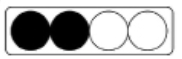
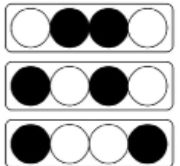
In some fungi, cell division during meiosis gives rise to an ordered spore sac containing a row of four haploid spores, as shown in Figure 19-28A.The position of each spore within the sac reflects its relation to its neighbors; in other words, spores that result from the same meiosis II division are positioned next to each other.You notice that a strain of the fungus produced by crossing a dark-colored strain with a light-colored strain gives rise mostly to spore sacs as shown in Figure 19-28B, with a few spore sacs like those in Figure 19-28C.Indicate whether the following statements are CORRECT or INCORRECT.Explain your reasoning.
(A)

In some fungi, cell division during meiosis gives rise to an ordered spore sac containing a row of four haploid spores, as shown in Figure 19-28A.The position of each spore within the sac reflects its relation to its neighbors; in other words, spores that result from the same meiosis II division are positioned next to each other.You notice that a strain of the fungus produced by crossing a dark-colored strain with a light-colored strain gives rise mostly to spore sacs as shown in Figure 19-28B, with a few spore sacs like those in Figure 19-28C.Indicate whether the following statements are CORRECT or INCORRECT.Explain your reasoning.  (A)    (B)    (C)      Figure 19-28 A.Meiosis I and meiosis II in the fungus occur in the reverse order from that which occur in humans. B.Recombination in the fungus can occur during prophase I. C.Recombination in the fungus cannot occur during prophase II. D.The spore sacs in Figure 19-28C result from recombination between the centromere and the gene responsible for spore color. E.Recombination has occurred between the gene responsible for spore color and the end of the chromosome arm.
(B)
In some fungi, cell division during meiosis gives rise to an ordered spore sac containing a row of four haploid spores, as shown in Figure 19-28A.The position of each spore within the sac reflects its relation to its neighbors; in other words, spores that result from the same meiosis II division are positioned next to each other.You notice that a strain of the fungus produced by crossing a dark-colored strain with a light-colored strain gives rise mostly to spore sacs as shown in Figure 19-28B, with a few spore sacs like those in Figure 19-28C.Indicate whether the following statements are CORRECT or INCORRECT.Explain your reasoning.  (A)    (B)    (C)      Figure 19-28 A.Meiosis I and meiosis II in the fungus occur in the reverse order from that which occur in humans. B.Recombination in the fungus can occur during prophase I. C.Recombination in the fungus cannot occur during prophase II. D.The spore sacs in Figure 19-28C result from recombination between the centromere and the gene responsible for spore color. E.Recombination has occurred between the gene responsible for spore color and the end of the chromosome arm.

(C)
In some fungi, cell division during meiosis gives rise to an ordered spore sac containing a row of four haploid spores, as shown in Figure 19-28A.The position of each spore within the sac reflects its relation to its neighbors; in other words, spores that result from the same meiosis II division are positioned next to each other.You notice that a strain of the fungus produced by crossing a dark-colored strain with a light-colored strain gives rise mostly to spore sacs as shown in Figure 19-28B, with a few spore sacs like those in Figure 19-28C.Indicate whether the following statements are CORRECT or INCORRECT.Explain your reasoning.  (A)    (B)    (C)      Figure 19-28 A.Meiosis I and meiosis II in the fungus occur in the reverse order from that which occur in humans. B.Recombination in the fungus can occur during prophase I. C.Recombination in the fungus cannot occur during prophase II. D.The spore sacs in Figure 19-28C result from recombination between the centromere and the gene responsible for spore color. E.Recombination has occurred between the gene responsible for spore color and the end of the chromosome arm.


Figure 19-28
A.Meiosis I and meiosis II in the fungus occur in the reverse order from that which occur in humans.
B.Recombination in the fungus can occur during prophase I.
C.Recombination in the fungus cannot occur during prophase II.
D.The spore sacs in Figure 19-28C result from recombination between the centromere and the gene responsible for spore color.
E.Recombination has occurred between the gene responsible for spore color and the end of the chromosome arm.

Correct Answer:

verifed

Verified

During normal meiosis, the chromosomes a...

View Answer

Unlock this answer now
Get Access to more Verified Answers free of charge

Related Questions

Unlock this Answer For Free Now!

View this answer and more for free by performing one of the following actions

qr-code

Scan the QR code to install the App and get 2 free unlocks

upload documents

Unlock quizzes for free by uploading documents