A 42-year-old man is brought to the emergency department 1 hour after the onset of severe headache, nausea, vomiting, and confusion. The patient has primary (essential) hypertension and chronic kidney disease; he has been prescribed 2 antihypertensive agents but has been noncompliant with therapy. Temperature is 36.8 C (98.2 F) , blood pressure is 240/150 mm Hg, heart rate is 90/min, and respirations are 20/min. Ophthalmologic examination shows bilateral papilledema. The lungs are clear to auscultation. Cardiac examination reveals an S4 and no murmurs. Laboratory results are as follows: 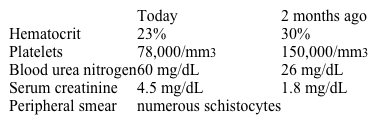 If renal biopsy is performed in this patient, which of the following pathologic findings is most likely to be found?
A) Fibrinoid necrosis of small arteriolar walls
B) Focal global glomerulosclerosis
C) Granulomatous inflammation of the media
D) Homogenous acellular thickening of arteriolar walls
E) Interstitial fibrosis and tubular atrophy
Correct Answer:

Verified
Q79: A 55-year-old man comes to the office
Q80: A 53-year-old man comes to the emergency
Q81: A 54-year-old Caucasian male comes to the
Q82: A 45-year-old woman comes to the office
Q83: A 38-year-old man dies suddenly at his
Q85: A 55-year-old man is brought to the
Q86: A 54-year-old man comes to the emergency
Q87: A 58-year-old man with dyspnea and chronic
Q88: A 10-year-old boy who recently immigrated from
Q89: A 63-year-old man comes to the emergency
Unlock this Answer For Free Now!
View this answer and more for free by performing one of the following actions

Scan the QR code to install the App and get 2 free unlocks

Unlock quizzes for free by uploading documents