A 78-year-old man is brought to the emergency department with abdominal pain. According to his wife, he has had epigastric discomfort for the past 2 days; this morning he refused to get out of bed and appeared confused. Past medical history is significant for diet-controlled diabetes mellitus, coronary artery disease with stable angina, hypertension, and gastroesophageal reflux disease.
On examination, the patient is lethargic. His temperature is 38 C (100.4 F) , blood pressure is 144/90 mm Hg, pulse is 112/min and irregular, and respirations are 20/min. Chest is clear on auscultation. There are no heart murmurs. The abdomen is tender to palpation in the epigastric and right upper quadrant areas. His skin is warm and there are no rashes.
Laboratory results are as follows: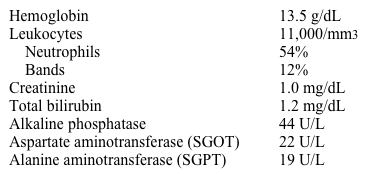
ECG reveals atrial fibrillation with no significant ST segment or T wave changes. Abdominal ultrasound shows several small gallstones without wall thickening or edema around the gallbladder. Common bile duct size is normal.
Which of the following is the best next step in managing this patient?
A) Cholecystostomy
B) Cholescintigraphy
C) CT angiography of the abdomen
D) Direct current cardioversion
E) Transesophageal echocardiogram
Correct Answer:

Verified
Q63: A 40-year-old man comes to the emergency
Q64: A 45-year-old man comes to the emergency
Q65: A 68-year-old man is brought to the
Q66: A 49-year-old woman comes to the emergency
Q67: A 70-year-old woman is brought to the
Q69: A 20-year-old woman comes to the emergency
Q70: A 66-year-old man comes to the emergency
Q71: An 82-year-old woman is brought to the
Q72: An 18-year-old man comes to the emergency
Q73: A 44-year-old construction worker comes to the
Unlock this Answer For Free Now!
View this answer and more for free by performing one of the following actions

Scan the QR code to install the App and get 2 free unlocks

Unlock quizzes for free by uploading documents