An 82-year-old nursing home resident with a history of hypertension and chronic obstructive pulmonary disease (COPD) is brought to the emergency department after 2 days of fever, cough, and lethargy. He was treated with acetaminophen at the nursing home, but was found to be very confused this morning. His oral intake has also been poor. His daily medications include lisinopril, hydrochlorothiazide, and tiotropium. He has never been hospitalized for a COPD exacerbation or pneumonia. At the nursing home, there have been two cases of mild febrile illness over the past two weeks.
In the emergency department, he is ill-appearing and obtunded. His temperature is 39.4 C (103 F) , blood pressure is 107/60 mm Hg, pulse is 68/min, and respirations are 26/min. Pulmonary examination reveals crackles at the left lung base. Bowel sounds are hyperactive and his abdomen is soft. There are no meningeal signs present.
Laboratory studies reveal: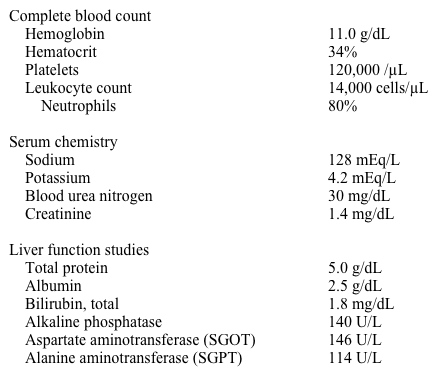
A chest x ray reveals an ill-defined infiltrate at the left lung base.
Piperacillin-tazobactam and vancomycin are started empirically. Over the next 48 hours, his clinical status continues to deteriorate. A repeat chest x ray reveals progressive infiltrates with worsening left lower lobe consolidation.
This patient's condition is most likely to respond to which of the following?
A) Ampicillin
B) Levofloxacin
C) Linezolid
D) Metronidazole
E) Oseltamivir
Correct Answer:

Verified
Q78: A 36-year-old woman comes to the emergency
Q79: A 20-year-old African American woman with sickle
Q80: A 19-year-old man comes to the emergency
Q81: A 67-year-old man is brought to the
Q82: A 42-year-old woman comes to the emergency
Q84: A 23-year-old woman with known sickle cell
Q85: A 22-year-old woman comes to the emergency
Q86: A 54-year-old woman who recently received a
Q87: A 28-year-old man comes to the emergency
Q88: A 71-year-old man is brought to the
Unlock this Answer For Free Now!
View this answer and more for free by performing one of the following actions

Scan the QR code to install the App and get 2 free unlocks

Unlock quizzes for free by uploading documents