A 60-year-old man is brought to the emergency department by his daughter due to a 2-day history of confusion and lethargy. According to the daughter, he has had a constant dry cough, fatigue, anorexia, polyuria, and constipation for several weeks. In addition, the patient has lost 9.1 kg (20 lb) over the past 3 months. He has no associated pain. The patient's medical history is significant for hypertension treated with chlorthalidone and for gastroesophageal reflux disease treated with over-the-counter antacids. He smokes 2 packs of cigarettes daily and consumes alcohol occasionally. Blood pressure is 130/90 mm Hg and pulse is 90/min. Temporal wasting is noted. Chest and abdominal examinations are normal. Mental status examination shows somnolence and disorientation to time. Neurologic examination shows decreased deep tendon reflexes. Laboratory results are as follows: 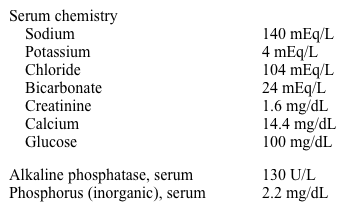 Which of the following is the most likely cause of this patient's symptoms?
A) Elevated parathyroid hormone
B) Elevated parathyroid hormone-related protein
C) Increased 1,25-dihydroxyvitamin D production
D) Local cytokine production
E) Metastatic osteolysis
F) Milk-alkali syndrome
G) Thiazide-induced hypercalcemia
Correct Answer:

Verified
Q174: A 48-year-old overweight man comes to the
Q175: A 50-year-old man comes to the office
Q176: A 75-year-old man is being evaluated for
Q177: A 66-year-old man comes to the office
Q178: A 24-year-old woman is evaluated for a
Q180: A 26-year-old man with a history of
Q181: A 54-year-old man is being evaluated for
Q182: A 68-year-old woman is brought to the
Q183: A 52-year-old man comes to the physician
Q184: A 44-year-old psychology professor with a history
Unlock this Answer For Free Now!
View this answer and more for free by performing one of the following actions

Scan the QR code to install the App and get 2 free unlocks

Unlock quizzes for free by uploading documents