An 81-year-old woman comes to the emergency department due to shortness of breath that has worsened over the past hour. It is associated with nausea. The patient does not have chest pain. Medical history is significant for hypertension, hyperlipidemia, and type 2 diabetes mellitus. Temperature is 36.7 C (98 F) , blood pressure is 92/64 mm Hg, pulse is 90/min, and respirations are 22/min. Oxygen saturation is 94% on room air. On examination, the patient is diaphoretic and appears to be in mild respiratory distress. Bilateral crackles are heard on lung auscultation. No heart murmurs are heard. An ECG is obtained and is shown in the exhibit. 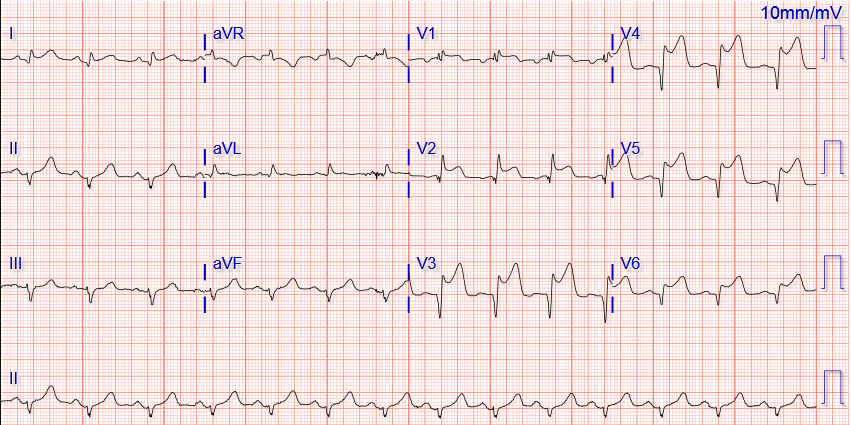 Blood samples are sent for testing. Intravenous furosemide is administered. Which of the following is the best next step in management?
A) Dopamine infusion and transfer to the cardiac intensive care unit
B) Emergency cardiac catheterization
C) Intravenous metoprolol in the emergency department
D) Intravenous nitroglycerin in the emergency department
E) Transfer to the telemetry ward after diuresis
Correct Answer:

Verified
Q257: A 62-year-old woman comes to the emergency
Q258: A 54-year-old man comes to the emergency
Q259: A 72-year-old man comes to the emergency
Q260: A 48-year-old man comes to the emergency
Q261: A 56-year-old man is brought to the
Q263: A 34-year-old man comes to the emergency
Q264: A 32-year-old man is brought to the
Q265: A 56-year-old man is brought to the
Q266: A 25-year-old man is brought to the
Q267: A 56-year-old man comes to the emergency
Unlock this Answer For Free Now!
View this answer and more for free by performing one of the following actions

Scan the QR code to install the App and get 2 free unlocks

Unlock quizzes for free by uploading documents