A 68-year-old woman with a history of advanced chronic obstructive pulmonary disease comes to the emergency department due to increased shortness of breath and cough for 12 hours. She took 2 extra nebulizer treatments at home with no relief of symptoms. She has no fever, nausea, vomiting, or hemoptysis. The patient has been oxygen dependent for the last 2 years. She has a 45-pack-year smoking history and quit about 6 years ago. Medications include tiotropium daily, fluticasone/salmeterol twice daily, and albuterol by metered-dose inhaler or nebulizer as needed. Temperature is 36.7 C (98.1 F) , blood pressure is 110/65 mm Hg, pulse is 110/min, and respirations are 28/min. The patient appears dyspneic and in moderate distress. She is given intravenous antibiotics, methylprednisolone, and 2 treatments of nebulized ipratropium with albuterol. Following these measures, the patient remains dyspneic and uses accessory muscles of respiration but is alert and follows commands. On 4 L/min O2, her pulse oximetry is 89%, and arterial blood gas shows pH of 7.30, PCO2 of 63 mm Hg, and PO2 of 54 mm Hg. Chest x-ray, shown in the image below, demonstrates hyperinflation: 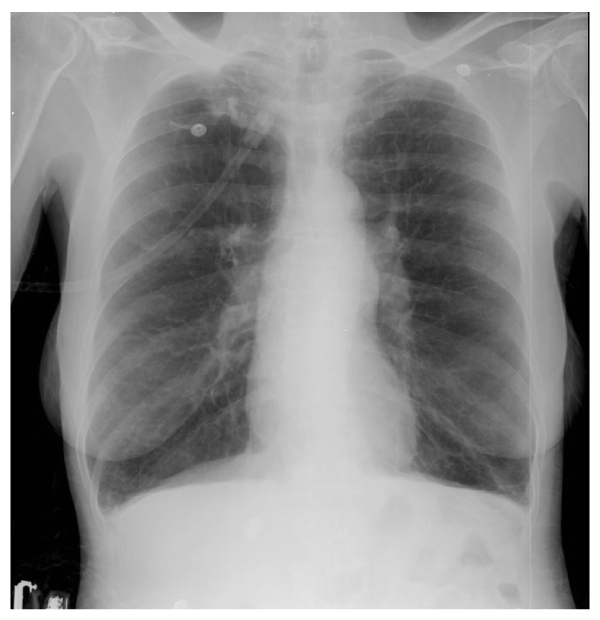 Which of the following is the best next step in management of this patient?
A) Administer aminophylline
B) Decrease supplemental oxygen flow rate
C) Increase supplemental oxygen flow rate
D) Intubate and mechanically ventilate the patient
E) Start noninvasive positive pressure ventilation
Correct Answer:

Verified
Q398: A 76-year-old woman is being evaluated for
Q399: A 29-year-old woman, gravida 3 para 2,
Q400: A 23-year-old woman is brought to the
Q401: A 10-year-old boy is brought to the
Q402: A 5-year-old boy is brought to the
Q404: A 3-year-old boy is brought to the
Q405: A 65-year-old man with a history of
Q406: A 34-year-old male immigrant from Mexico is
Q407: A 68-year-old man comes to the emergency
Q408: An 18-month-old boy is brought to the
Unlock this Answer For Free Now!
View this answer and more for free by performing one of the following actions

Scan the QR code to install the App and get 2 free unlocks

Unlock quizzes for free by uploading documents