A 68-year-old man comes to the emergency department due to progressively worsening shortness of breath for 2 days. He has had a week of low-grade fever, runny nose, and productive cough. The patient's other medical problems include coronary artery disease, hypertension, and hyperlipidemia. He was hospitalized a year ago for acute myocardial infarction and was treated with drug-eluting stent placement in the left anterior descending artery. The patient has a 40-pack-year smoking history and quit after the myocardial infarction. His temperature is 37.2 C (99 F) , blood pressure is 140/90 mm Hg, pulse is 90/min, and respirations are 22/min. The patient appears to be in mild respiratory distress. He uses accessory respiratory muscles for breathing but can speak in full sentences. Neck veins are mildly distended, especially during expiration. Lung auscultation shows decreased breath sounds and bilateral wheezes. Heart sounds are distant. Plasma B-type natriuretic peptide level is 88 pg/mL (normal 0-100 pg/mL) . Chest x-ray is shown below. 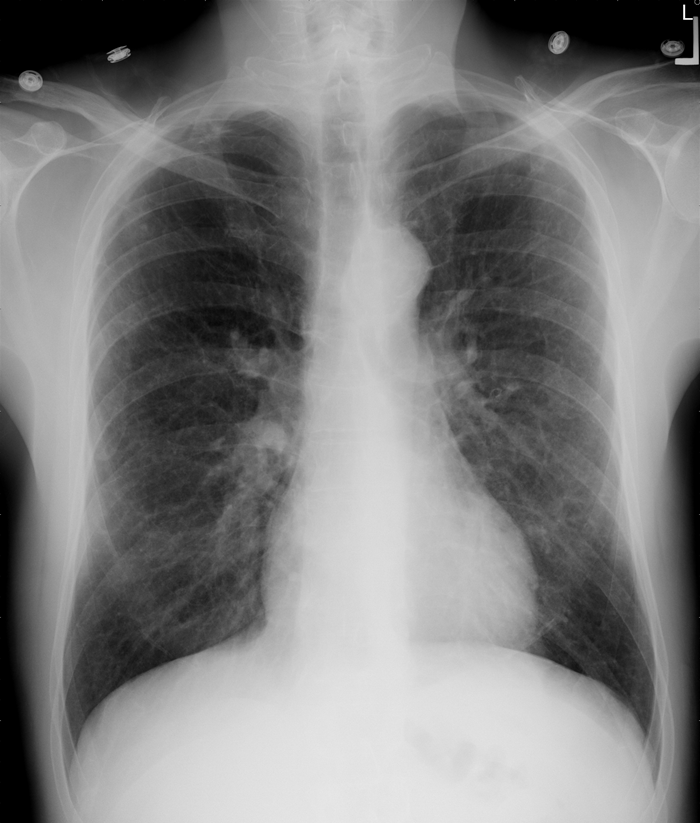 Which of the following is the most likely cause of this patient's presentation?
A) Acute asthma exacerbation
B) Acute decompensated heart failure
C) Acute pulmonary embolism
D) Chronic obstructive pulmonary disease exacerbation
E) Community-acquired pneumonia
F) Subacute cardiac tamponade
Correct Answer:

Verified
Q402: A 5-year-old boy is brought to the
Q403: A 68-year-old woman with a history of
Q404: A 3-year-old boy is brought to the
Q405: A 65-year-old man with a history of
Q406: A 34-year-old male immigrant from Mexico is
Q408: An 18-month-old boy is brought to the
Q409: A 65-year-old man comes to the emergency
Q410: A 65-year-old man with chronic obstructive pulmonary
Q411: A 28-year-old man develops headache, nausea, cough,
Q412: A 2-year-old boy is brought to the
Unlock this Answer For Free Now!
View this answer and more for free by performing one of the following actions

Scan the QR code to install the App and get 2 free unlocks

Unlock quizzes for free by uploading documents