A 70-year-old man comes to the office due to early satiety, nausea, and abdominal distension for the past 3 months. These symptoms have increased in frequency and limited the patient's ability to eat a full meal. For the past week, he has been unable to consume any solid food without vomiting afterward. The patient has also experienced a 13.5-kg (29.8-lb) weight loss during this period. He does not have dysphagia, hematochezia, melena, or hematemesis. Current medication is omeprazole, which he takes daily for heartburn. Temperature is 37.5 C (99.5 F) , blood pressure is 132/78 mm Hg, pulse is 85/min, and respiratory rate is 12/min. Physical examination is significant for bilateral temporal wasting. Heart and lung sounds are unremarkable, and there is no appreciable lymphadenopathy. The abdomen is distended and tender to palpation in the epigastrium. A succussion splash is elicited during abdominal auscultation. Laboratory results are as follows: 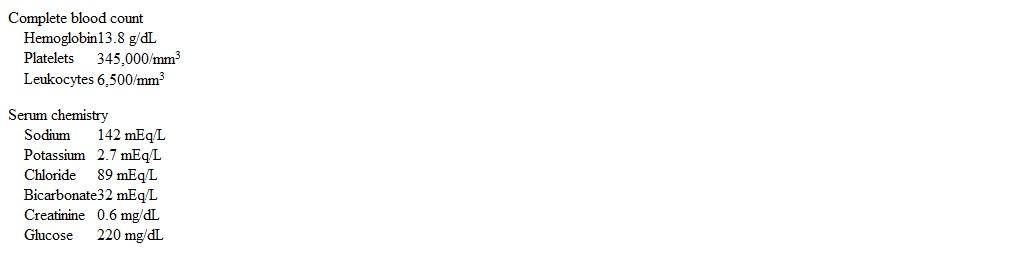 Which of the following most likely explains this patient's presentation?
A) Annular pancreas
B) Gastric bezoar
C) Gastric volvulus
D) Pancreatic adenocarcinoma
E) Peptic ulcer disease
Correct Answer:

Verified
Q568: A 65-year-old woman comes to the office
Q569: A 23-year-old man comes to the office
Q570: A 41-year-old woman comes to the office
Q571: An 18-year-old woman comes to the office
Q572: A 51-year-old man comes to the physician
Q574: A 37-year-old primigravida at 14 weeks gestation
Q575: A 14-year-old boy is brought to the
Q576: A 52-year-old man comes to the physician
Q577: A 52-year-old man comes to the physician
Q578: A 34-year-old woman comes to the office
Unlock this Answer For Free Now!
View this answer and more for free by performing one of the following actions

Scan the QR code to install the App and get 2 free unlocks

Unlock quizzes for free by uploading documents