A 27-year-old man comes to the physician for follow-up of hypertension. He feels healthy and has no complaints. Two weeks ago, he was found to have high blood pressure during an emergency department visit for a sports injury. The patient has a strong family history of hypertension and stroke. His blood pressure is 155/97 mm Hg and pulse is 78/min. Physical examination and basic laboratory workup are unremarkable. He is instructed to follow a low-salt diet and started on low-dose (12.5 mg daily) hydrochlorothiazide. Two weeks later, the patient comes to the emergency department complaining of muscle cramps, weakness, and palpitations. His blood pressure is 150/93 mm Hg and pulse is 82/min. Mucous membranes are moist. Laboratory results are as follows: 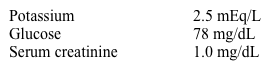 Which of the following is the best next step in management of this patient?
A) Computed tomography angiography of the abdomen
B) Dexamethasone suppression test
C) Plasma renin activity and aldosterone concentration
D) Serum thiazide level
E) Urine potassium excretion by 24-hour collection
Correct Answer:

Verified
Q1020: A 36-year-old woman comes to the emergency
Q1021: A 23-year-old man is brought to the
Q1022: A 56-year-old man is admitted to the
Q1023: A 68-year-old woman is hospitalized for right
Q1024: A 45-year-old woman comes to the office
Q1026: A 27-year-old man with type 1 diabetes
Q1027: A 44-year-old woman comes to the office
Q1028: A 64-year-old woman comes to the office
Q1029: A 50-year-old man comes to the physician
Q1030: A 53-year-old man comes to the physician
Unlock this Answer For Free Now!
View this answer and more for free by performing one of the following actions

Scan the QR code to install the App and get 2 free unlocks

Unlock quizzes for free by uploading documents