A 23-year-old man comes to the emergency department due to severe abdominal pain and fatigue. He has had nausea and vomiting for several hours and is unable to eat. He took ibuprofen but has had no pain relief. The patient has a history of anemia and dark brown urine that has not been evaluated because he tries "to avoid going to the doctor." Review of systems is otherwise negative, and he has no known medical conditions. He emigrated from Scotland during childhood but has not traveled outside the United States since. Temperature is 38.8 C (101.8 F) , blood pressure is 120/80 mm Hg, pulse is 102/min, and respirations are 16/min. There is tenderness in the right upper quadrant of the abdomen that is exacerbated by deep inspiration. Splenomegaly and jaundice are present. There are no peritoneal signs. The remainder of the examination is normal. Laboratory results are as follows: 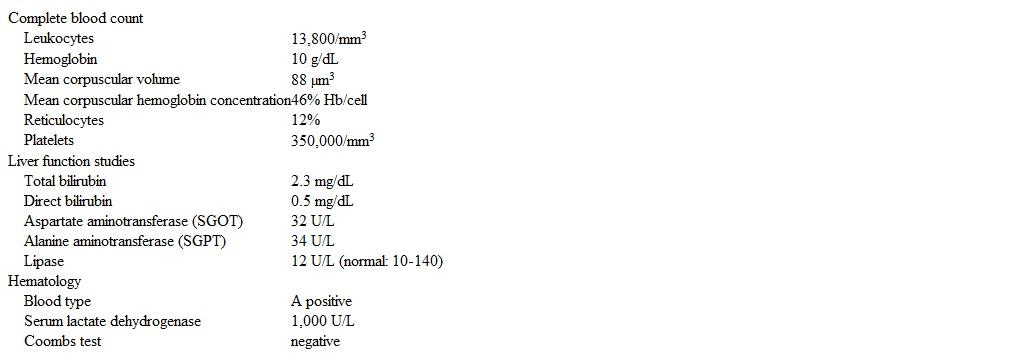 Which of the following is the most likely primary cause of this patient's anemia?
A) Acute hemorrhage
B) Autoimmune hemolysis
C) Genetic red blood cell defect
D) Malignant bone marrow infiltration
E) Medication side effect
F) Viral suppression
G) Vitamin deficiency
Correct Answer:

Verified
Q1184: A 42-year-old woman is evaluated for chronic
Q1185: A 34-year-old male is brought to the
Q1186: A 60-year-old man comes to the office
Q1187: A 35-year-old Caucasian male with aplastic anemia
Q1188: A 25-year-old woman comes to the office
Q1190: A 54-year-old man is brought to the
Q1191: A 43-year-old man is being evaluated for
Q1192: A 25-year-old woman comes to the physician
Q1193: A 30-year-old white man comes to the
Q1194: A 23-year-old man comes to the emergency
Unlock this Answer For Free Now!
View this answer and more for free by performing one of the following actions

Scan the QR code to install the App and get 2 free unlocks

Unlock quizzes for free by uploading documents