A 33-year-old postpartum woman is brought to the emergency department with sudden onset of severe dyspnea and right-sided chest pain that began 3 hours ago when getting up from breastfeeding her child. The patient was discharged from the hospital 4 days ago after an uneventful elective cesarean delivery. She does not use tobacco, alcohol, or illicit drugs. Temperature is 36.7 C (98 F) , blood pressure is 100/70 mm Hg, pulse is 128/min, and respirations are 32/min. Pulse oximetry is 84% on room air. BMI is 34 kg/m2. Examination shows a woman in moderate respiratory distress with evidence of accessory muscle use. She is alert and cooperative, without cyanosis or jaundice. Heart sounds are normal. The chest is clear to auscultation. Chest x-ray reveals no infiltrates and heart size is normal. ECG shows sinus tachycardia. Arterial blood gas analysis results are as follows: 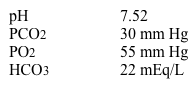 In addition to supplemental oxygen therapy, which of the following is the best initial step in management of this patient?
A) CT angiogram of the chest
B) D-dimer testing
C) Intravenous heparin infusion
D) Lower extremity venous ultrasound
E) Transthoracic echocardiogram
F) Troponin and CK-MB testing
Correct Answer:

Verified
Q1445: An 80-year-old woman is brought to the
Q1446: A 44-year-old man comes to the office
Q1447: A 56-year-old woman is brought to the
Q1448: A 37-year-old man is admitted to the
Q1449: A 56-year-old woman is brought to the
Q1451: A 36-year-old woman comes to the office
Q1452: A 56-year-old obese man comes to the
Q1453: A 72-year-old man is brought to the
Q1454: A 51-year-old man develops acute respiratory distress
Q1455: A 53-year-old woman is brought to the
Unlock this Answer For Free Now!
View this answer and more for free by performing one of the following actions

Scan the QR code to install the App and get 2 free unlocks

Unlock quizzes for free by uploading documents