A 20-year-old man is brought to the emergency department with a one-day history of fever, headache, and altered mental status. He has no history of medical illness. Cerebral spinal fluid analysis shows lymphocytic pleocytosis, elevated protein level, and normal glucose level. The patient is started on high-dose intravenous acyclovir. Two days later, his neurologic status improves. Polymerase chain reaction assay for herpes simplex virus DNA comes back positive. However, the patient complains of nausea and abdominal discomfort. He is afebrile, normotensive without orthostasis, and has normal oxygen saturation. The rest of the physical examination is unremarkable. Laboratory results are as follows: 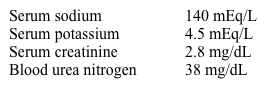 His admission creatinine level was 0.8 mg/dL. Which of the following is the most likely cause of acute kidney injury in this patient?
A) Acute interstitial nephritis
B) Bladder neck obstruction
C) Glomerular injury
D) Prerenal azotemia
E) Renal tubular obstruction
Correct Answer:

Verified
Q1457: A 35-year-old African American woman comes to
Q1458: A 31-year-old woman comes to the emergency
Q1459: An 81-year-old nursing home resident is brought
Q1460: A 37-year-old woman comes to the emergency
Q1461: A 54-year-old man comes to the emergency
Q1463: A 55-year-old man is evaluated for puffiness
Q1464: A 50-year-old man comes to the office
Q1465: A 43-year-old man comes to the office
Q1466: A 68-year-old man is admitted with a
Q1467: A 61-year-old man comes to the office
Unlock this Answer For Free Now!
View this answer and more for free by performing one of the following actions

Scan the QR code to install the App and get 2 free unlocks

Unlock quizzes for free by uploading documents