A 45-year-old woman is evaluated on postoperative day 3 due to nausea and vomiting. The patient underwent a total abdominal hysterectomy for symptomatic uterine fibroids, and the surgery was complicated by ureter injury and stent placement. She was placed on a clear liquid diet on postoperative day 2, when she began to have some nausea. Since then, the patient has had multiple episodes of vomiting but no hematemesis. She has not passed flatus or had a bowel movement since the surgery. Temperature is 37.2 C (99 F) , blood pressure is 130/80 mm Hg, and pulse is 80/min. The abdomen is mildly distended and has decreased bowel sounds. The incision is tender to palpation but has no surrounding erythema or discharge. Laboratory results are as follows: 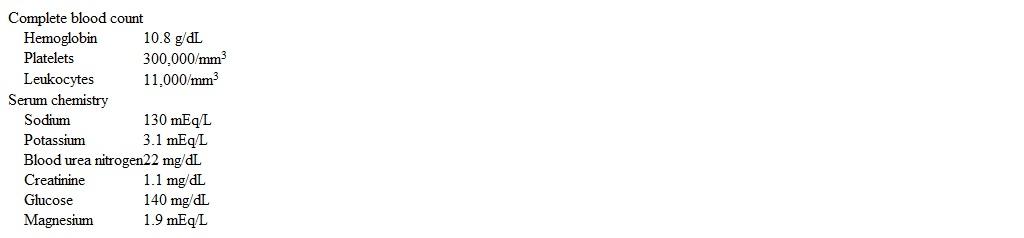 Abdominal x-ray is shown in the exhibit.
 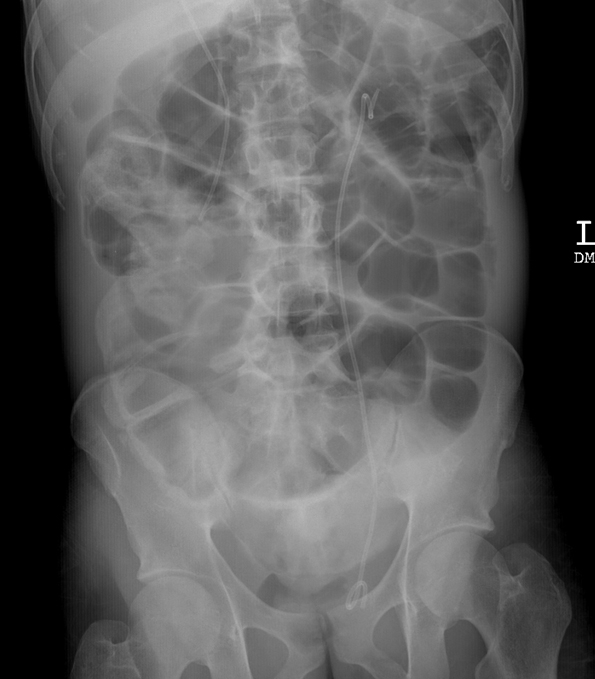 In addition to intravenous fluid administration, which of the following is the best next step in the management of this patient?
A) Bowel rest and serial examinations
B) Broad-spectrum antibiotics
C) Rectal enema
D) Small bowel follow-through
E) Urgent surgical exploration
Correct Answer:

Verified
Q215: A 42-year-old woman is evaluated in the
Q216: A 65-year-old man with exertional chest pain
Q217: A 39-year-old woman comes to the office
Q218: A 42-year-old woman comes to the emergency
Q219: A 42-year-old woman, gravida 3 para 3,
Q221: A 58-year-old woman comes to the emergency
Q222: A 68-year-old man is recovering in the
Q223: A 76-year-old man comes for outpatient follow-up
Q224: A 72-year-old man is evaluated on day
Q225: A 62-year-old man undergoes a partial pancreatectomy
Unlock this Answer For Free Now!
View this answer and more for free by performing one of the following actions

Scan the QR code to install the App and get 2 free unlocks

Unlock quizzes for free by uploading documents