A 28-year-old man is brought to the emergency department after a high-speed motor vehicle collision in which he was the restrained driver. The patient is awake and has left chest pain and vague abdominal discomfort. Blood pressure is 114/74 mm Hg and pulse is 112/min. Physical examination shows chest and abdominal ecchymoses and tenderness in the distribution of the seat belt. Breath sounds are equal bilaterally. Heart sounds are normal. The abdomen is mildly tender. Chest x-ray reveals a left sixth rib fracture without pneumothorax. Focused assessment with sonography is negative for free abdominal fluid. CT scan of the abdomen shows thickened proximal small bowel and a small mesenteric hematoma. The patient is hospitalized for monitoring and supportive care. Over the next 24 hours, he develops worsening abdominal pain, nausea, vomiting, and abdominal tenderness with guarding. Repeat CT scan of the abdomen is shown in the image below: 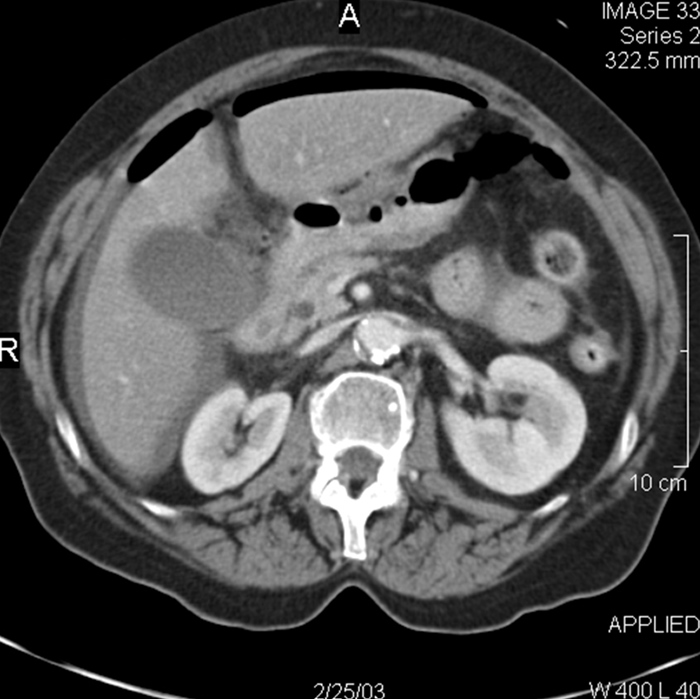 Which of the following is the best next step in management of this patient?
A) Diagnostic peritoneal lavage
B) Increased analgesia and close observation
C) Mesenteric angiography
D) Surgical exploration
E) Upper gastrointestinal series
Correct Answer:

Verified
Q301: A previously healthy 35-year-old man comes to
Q302: A 45-year-old man comes to the emergency
Q303: A 44-year-old woman comes to the emergency
Q304: A 42-year-old man comes to the emergency
Q305: A 62-year-old woman on the postoperative floor
Q307: A 10-year-old boy is brought to the
Q308: A 24-year-old man is brought to the
Q309: A 19-year-old woman comes to the emergency
Q310: A 47-year-old woman comes to the office
Q311: A 44-year-old-woman comes to the emergency department
Unlock this Answer For Free Now!
View this answer and more for free by performing one of the following actions

Scan the QR code to install the App and get 2 free unlocks

Unlock quizzes for free by uploading documents