A 28-year-old woman, gravida 1 para 0, at 35 weeks gestation comes to the emergency department due to nausea, vomiting, and right upper quadrant pain. The patient's symptoms began last night but have progressively worsened throughout the day. Temperature is 37.2 C (99 F) , blood pressure is 160/94 mm Hg, and pulse is 80/min. Physical examination shows right upper quadrant tenderness without rebound or guarding. Fetal heart rate tracing shows a baseline of 140 with moderate variability, no decelerations, and no accelerations. Cardiopulmonary examination is unremarkable. The abdomen is tender to palpation over the right upper quadrant; the uterus is nontender. There is 2+ edema of the lower extremities. Laboratory results are as follows: 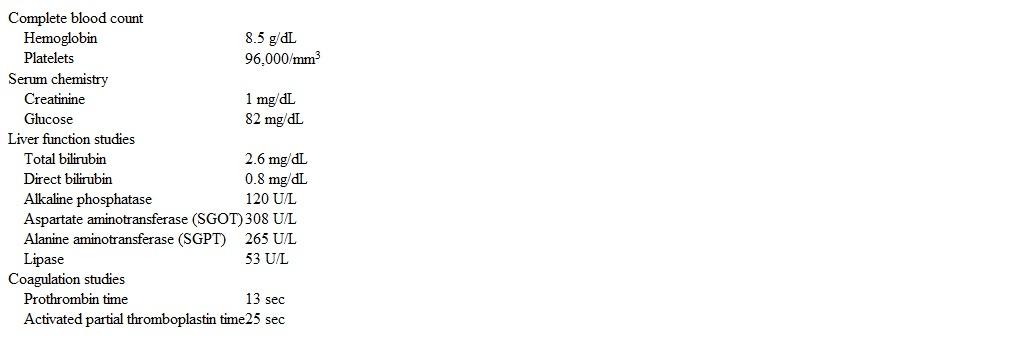 Which of the following is the most likely cause of this patient's presentation?
A) Acute microvesicular fatty infiltration of hepatocytes
B) Antibody-mediated platelet destruction
C) Intrahepatic cholestasis
D) Premature placental separation
E) Systemic microangiopathy and platelet consumption
Correct Answer:

Verified
Q381: During the patient's evaluation, her blood pressure
Q382: A 37-year-old primigravid woman at 34 weeks
Q383: A 37-year-old woman, gravida 1 para 0,
Q384: A 23-year-old woman, gravida 1 para 0,
Q385: A 34-year-old woman, gravida 2 para 1,
Q387: A 28-year-old woman, gravida 1 para 0,
Q388: A 22-year-old woman with type 1 diabetes
Q389: A 27-year-old woman, gravida 1 para 0,
Q390: A 34-year-old woman, gravida 2 para 1,
Q391: A 32-year-old woman, gravida 2 para 1,
Unlock this Answer For Free Now!
View this answer and more for free by performing one of the following actions

Scan the QR code to install the App and get 2 free unlocks

Unlock quizzes for free by uploading documents