A 65-year-old woman is brought to the emergency department by paramedics after falling on a snow-covered sidewalk. The patient fell backward onto her hands while trying to maintain her balance and immediately felt a sharp, excruciating pain in her right arm. She also notes mild tenderness and bruising on the right flank and right buttock. The patient has a history of osteoporosis and hypertension and takes valsartan, alendronate, and a vitamin D supplement. She does not use tobacco, alcohol, or illicit drugs. In the emergency department, radiograph reveals a displaced fracture of the right distal radius. The patient is admitted to the hospital and undergoes open reduction and internal fixation of the radius fracture. On postoperative day 2, she reports severe, constant, burning pain over her right flank. The postsurgical pain in the right arm is mild and well controlled with low-dose morphine as needed. Temperature is 37.8 C (100 F) , blood pressure is 145/84 mm Hg, pulse is 97/min, and respirations are 16/min. Mucous membranes are moist and the oropharynx is without lesions. Cardiopulmonary auscultation reveals clear lungs and normal heart sounds. The abdomen is soft, nontender, and nondistended. The right flank is tender to light touch with a rash over the area, as shown in the exhibit. 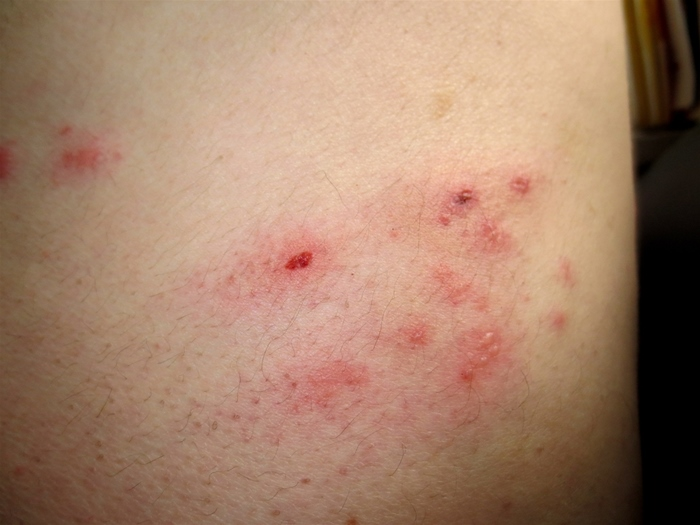 The surgical wound is healing normally without signs of infection. The patient has an otherwise uncomplicated postoperative course and is ready for discharge. Her skin lesions are partially crusted, and she will continue oral valacyclovir as an outpatient. The patient plans to host a small family dinner tonight and is concerned about the risk of disease transmission. There will be no infants, pregnant women, or immunocompromised individuals at this gathering. Which of the following is the most appropriate recommendation for this patient?
A) Family members should wear gloves and masks to prevent exposure
B) She can cover the affected parts and attend the family dinner
C) She should not attend until all of the lesions have crusted
D) She should not attend until she has finished treatment
E) There is no risk of transmission while taking antiviral medication
Correct Answer:

Verified
Q141: An 11-month-old girl is brought to the
Q142: A 25-year-old African-American medical student comes to
Q143: A 65-year-old woman is brought to the
Q144: A 25-year-old African-American medical student comes to
Q145: A 70-year-old man comes to the office
Q147: A 2-week-old boy is brought to the
Q148: A 65-year-old woman is brought to the
Q149: A 16-year-old boy comes to the office
Q150: A 7-month-old girl is brought to the
Q151: A 25-year-old African-American medical student comes to
Unlock this Answer For Free Now!
View this answer and more for free by performing one of the following actions

Scan the QR code to install the App and get 2 free unlocks

Unlock quizzes for free by uploading documents