Passage
The heart is a muscular organ comprising four chambers, two atria and two ventricles, that function synergistically to pump blood through a vast, closed network of blood vessels. The chambers are separated by membranous muscular barriers known as septa. Oxygenated blood returning from the lungs via the pulmonary veins fills the left atrium and enters the left ventricle, which then pumps the blood into the systemic arteries to supply other organs in the body. By contrast, deoxygenated blood returning from systemic veins first enters the right atrium, then the right ventricle, and is ultimately siphoned into the pulmonary arteries leading to the lungs. The necessary oxygen, nutrient, and waste exchange occurs between the thinnest blood vessels (capillaries) and neighboring tissues of the systemic and pulmonary circuits.Blood flow throughout the circulatory system is dictated by blood (hydrostatic) pressure, vascular resistance (force opposing blood flow through a vessel) , and cardiac output (blood volume expelled from the ventricles per unit time) . When blood traverses a vessel, it exerts hydrostatic pressure on the vessel walls, which results in the forced movement of fluid out of the vessel and into the interstitial space. The circulating plasma proteins cause the osmotic pressure within the vessel to be higher than that of the interstitial fluid. In turn, osmotic pressure causes fluid to flow from the interstitial space into the blood vessel, opposing hydrostatic pressure.Cardiac output depends in part on heart rate, which is tightly regulated by the sinoatrial (SA) and atrioventricular (AV) nodes, specialized groups of self-depolarizing cells located in the upper right atrial wall and lower interatrial septum, respectively. Action potentials (APs) generated by SA nodal cells stimulate atrial contraction as they travel to the AV node. The AV node delays AP transmission to ventricular cells, ensuring ventricular filling is complete prior to heart contraction.A 63-year-old male patient collapsed while exercising and was hospitalized. The patient presented with an elevated heart rate, low systemic blood pressure, and abnormally low blood oxygen levels. In addition, x-rays revealed excess fluid in his lungs.
-The systemic blood pressure gradient ΔP is equal to the mean pressure of blood exiting the heart through arteries minus the mean pressure of blood returning to the heart through veins. The relationship of ΔP to cardiac output (CO) and vascular resistance (VR) is given by: 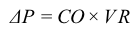 ΔP=CO×VRGiven this, which of the following physiological changes would cause increased VR within vessels of the circulatory system? (Note: Assume all other physiological factors remain constant.)
A) Increased vasodilation of arteries
B) Heightened activity of the SA node
C) Reduced ventricular filling prior to contraction
D) Decreased arterial blood pressure
Correct Answer:

Verified
Q301: Passage
The heart is a muscular organ comprising
Q302: Q303: Passage Q304: Protein coding genes are composed of multiple Q305: A specific recessive X-linked mutation prevents the Q307: Scientists identified two distinct pathogens in blood Q308: Cells of the innate immune system and Q309: The sequence below represents a mature mRNA Q310: In humans, meiosis and mitosis are most Q311: Passage
The heart is a muscular organ comprising
Proteins known as cancer/testis antigens (CTAs) are
Unlock this Answer For Free Now!
View this answer and more for free by performing one of the following actions

Scan the QR code to install the App and get 2 free unlocks

Unlock quizzes for free by uploading documents