A researcher is comparing surface antigens X and Y from two distinct viruses. He acquires antigen X antibodies from an animal that has previously been exposed to the virus encoding this antigen. After that, the antibodies are added to test plates. Following that, a set amount of radiolabeled X antigen is applied to the plates. Unlabeled Y antigens are then given to each plate in escalating quantities, and the plates are washed to eliminate unbound antigens. The graph below depicts radioactivity as a function of Y antigen concentration. . 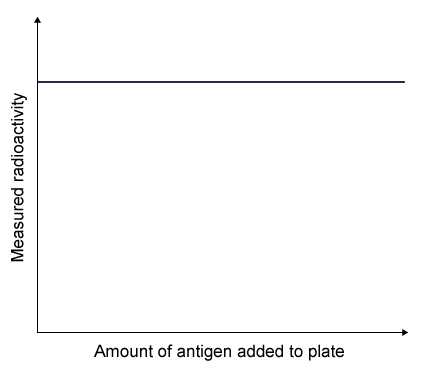 Which of the following best describes the results of this experiment?
A) Antigen X and antigen Y have no epitopes in common
B) Antigen X and antigen Y have the same epitopes
C) Antigen Y shares most of the epitopes of antigen X
D) Antigen Y shares some of the epitopes of antigen X
Correct Answer:

Verified
Q42: A 56-year-old woman with a history of
Q43: A 23-year-old woman comes to the physician
Q44: A 33 year-old female is being followed
Q45: Different kinds of immunoglobulins have distinct structures.
Q46: On flow cytometric analysis of a sample
Q48: A researcher identifies a group of malignant
Q49: A 10-month-old kid is admitted to the
Q50: A 23-year-old man comes to the physician
Q51: A 5-year-old boy with severe, recurrent respiratory
Q52: A 62-year-old man arrives to the office
Unlock this Answer For Free Now!
View this answer and more for free by performing one of the following actions

Scan the QR code to install the App and get 2 free unlocks

Unlock quizzes for free by uploading documents