A 40-year-old woman comes to the office because of a 3-month history of itchiness in both eyes. During this time, she has also had difficulty swallowing solid food. She is sexually active with her husband and has recently noticed increased pain with sexual intercourse. Medical history is unremarkable and she takes no medications. Her sister has vitiligo. Vital signs are within normal limits. Oropharyngeal examination shows dry mucous membranes and prominent tongue fissures. Ophthalmologic examination shows normal visual acuity and scleral injection in both eyes. A filter paper placed on the patient's lower eyelid wicks 3 mm of moisture after 5 minutes. A salivary gland biopsy image representative of this patient's disease process is shown in the exhibit. 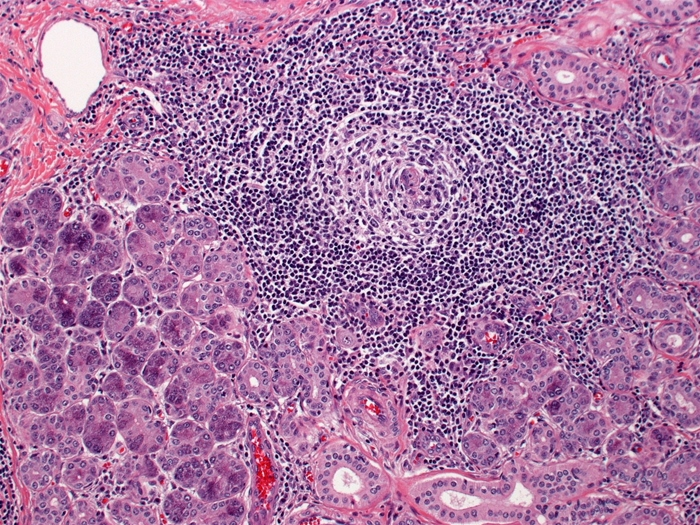 This patient is at greatest risk for which of the following due to her current condition?
A) Arterial and venous thrombosis
B) Atlantoaxial subluxation
C) Non-Hodgkin lymphoma
D) Renal arterial occlusion
E) Restrictive cardiomyopathy
Correct Answer:

Verified
Q528: A 38-year-old man comes to the physician
Q529: A 38-year-old lady arrives at an urgent
Q530: A 42-year-old man comes to the physician
Q531: A 38-year-old man comes to the physician
Q532: An 8-year-old child is brought to the
Q534: A 19-year-old woman is brought to the
Q535: A 72-year-old man is seen for an
Q536: A 65-year-old man arrives to the office
Q537: A 56-year-old woman comes to the physician
Q538: A 40-year-old man is brought to the
Unlock this Answer For Free Now!
View this answer and more for free by performing one of the following actions

Scan the QR code to install the App and get 2 free unlocks

Unlock quizzes for free by uploading documents