A 56-year-old woman comes to the emergency department due to acute dyspnea and cough. She has a history of chronic obstructive pulmonary disease (COPD) treated with inhaled albuterol, tiotropium, and fluticasone. The patient's other medical problems include hypertension and hypothyroidism, for which she takes lisinopril, hydrochlorothiazide, and levothyroxine. She also takes a daily over-the-counter supplement containing vitamin D and calcium carbonate. The patient has a 25-pack-year smoking history but quit after the diagnosis of COPD was made 4 years ago. She experienced menopause at age 49 and has no history of low trauma fracture or loss of height.
Blood pressure is 140/80 mm Hg, pulse is 108/min, and respirations are 24/min. Oxygen saturation is 94% on 2 L of oxygen via nasal cannula. BMI is 29 kg/m2. Chest examination reveals coarse rhonchi bilaterally, and the remainder of the physical examination is unremarkable.
Laboratory results are as follows: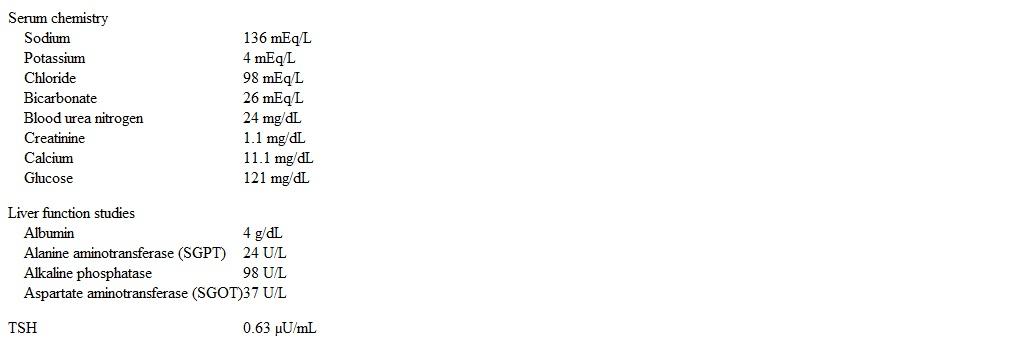 The patient is admitted to the hospital and treated with systemic glucocorticoids, antibiotics, and inhaled bronchodilators. On the third day of hospitalization, repeat serum calcium is 11.2 mg/dL and parathyroid hormone is 60 pg/mL (normal: 10-65) .
Which of the following is the most likely cause of this patient's hypercalcemia?
A) Dehydration-induced hypercalcemia
B) Drug-induced hypercalcemia
C) Hypercalcemia of malignancy
D) Parathyroid hormone-mediated hypercalcemia
E) Vitamin D toxicity
Correct Answer:

Verified
Q178: A 21-year-old woman comes to the office
Q179: A 50-year-old woman comes to the office
Q180: A 27-year-old woman comes to the office
Q181: A 75-year-old woman is seen in consultation
Q182: A 27-year-old woman comes to the physician
Q184: A 36-year-old woman comes to the office
Q185: A 47-year-old woman recovering from an upper
Q186: A 40-year-old woman is evaluated for mildly
Q187: A 76-year-old man comes to the office
Q188: A 42-year-old woman with known HIV infection
Unlock this Answer For Free Now!
View this answer and more for free by performing one of the following actions

Scan the QR code to install the App and get 2 free unlocks

Unlock quizzes for free by uploading documents