A 73-year-old man comes to the office due to 2 months of worsening fatigue. The patient used to walk 1-2 miles each day but recently began having difficulty covering this distance. He has had no chest pain, shortness of breath, fever, joint pain, or abdominal issues. The patient underwent coronary artery bypass grafting 5 years ago. His other medical problems include hypothyroidism, hypertension, hyperlipidemia, and benign prostatic hyperplasia. He quit smoking 10 years ago and drinks 1 or 2 glasses of wine with dinner almost every day. His medications include aspirin, levothyroxine, atorvastatin, tamsulosin, metoprolol, and lisinopril.
Temperature is 37 C (98.6 F) , blood pressure is 130/80 mm Hg, pulse is 78/min, and respirations are 14/min. Pulse oximetry shows 98% on room air. BMI is 29 kg/m2. Examination reveals mucosal pallor. There is no jugular venous distension, thyromegaly, or lymphadenopathy. The lungs are clear to auscultation. No hepatosplenomegaly or peripheral edema is present. Neurological examination is unremarkable.
Laboratory results are as follows: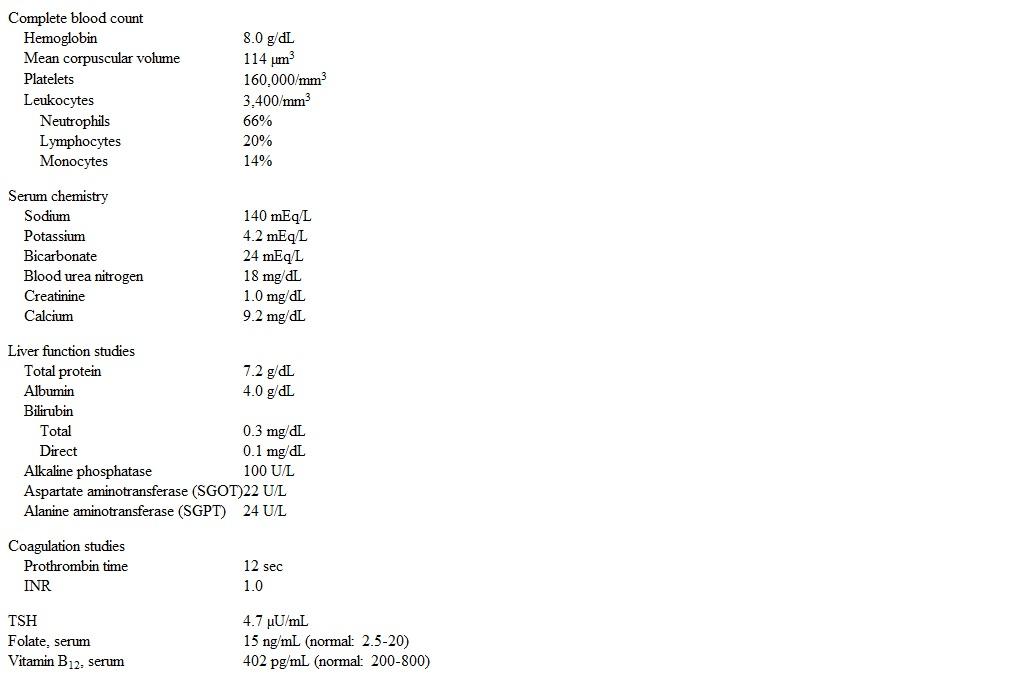 Peripheral blood smear shows ovalomacrocytic red cells and reduced granulocyte segmentation. Complete blood count was normal a year ago. Colonoscopy was normal 5 years ago.
Which of the following is the most appropriate next step in management of this patient?
A) Abstinence from alcohol and repeat blood count in 3 months
B) Bone marrow biopsy
C) Increase in levothyroxine dose
D) Methylmalonic acid levels
E) Serum and urine protein electrophoresis
Correct Answer:

Verified
Q409: A 28-year-old woman comes to the physician
Q410: A 57-year-old man with prostate cancer comes
Q411: A 67-year-old man comes to the physician
Q412: A 26-year-old woman comes to the physician
Q413: A 37-year-old man comes to the office
Q415: A 70-year-old woman comes to the office
Q416: A 30-year-old woman comes to the physician
Q417: A 72-year-old man comes to the office
Q418: A 56-year-old man from Southeast Asia comes
Q419: A 24-year-old woman has a low platelet
Unlock this Answer For Free Now!
View this answer and more for free by performing one of the following actions

Scan the QR code to install the App and get 2 free unlocks

Unlock quizzes for free by uploading documents