A 51-year-old man comes to the physician because of persistent swelling over the left mandible for the last 3 months. The swelling initially responded to antibiotics prescribed to him 2 months ago; however, it subsequently returned. His other medical problems include a history of poorly controlled type 2 diabetes mellitus and hypertension. His medications include metformin, glyburide, and lisinopril. He denies tobacco, alcohol, or illicit drug use.
His temperature is 37 C (98.6 F) , blood pressure is 130/80 mm Hg, and respirations are 12/min. Eye examination reveals intact ocular movements. There is no nasal discharge or sinus tenderness. Palpation over the jaw reveals a 4 cm mass extending from the mandible that is raised, non-tender, and firm. There is a sinus tract extending to the skin with purulent and blood-tinged drainage. No erythema or fluctuance is noted. Examination of the oral cavity shows poor dentition with gingivitis, but no open lesions. There is neither anterior nor posterior cervical lymphadenopathy. The remainder of the physical examination is within normal limits.
Laboratory results are as follows: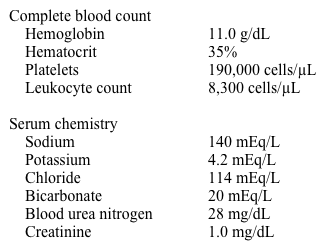
Which of the following is the most effective treatment for this patient's condition?
A) Chemotherapy
B) Levofloxacin
C) Metronidazole
D) Penicillin
E) Prednisone
Correct Answer:

Verified
Q441: A 24-year-old woman comes to the physician
Q442: A 60-year-old woman is evaluated for occasional
Q443: A 59-year-old woman returns to the office
Q444: A 23-year-old man comes to the physician
Q445: A 48-year-old woman comes to the office
Q447: A 45-year-old woman comes to the physician
Q448: A 34-year-old woman returns to the physician
Q449: A 57-year-old woman comes to the office
Q450: A 60-year-old man comes to the office
Q451: A 51-year-old woman comes to the office
Unlock this Answer For Free Now!
View this answer and more for free by performing one of the following actions

Scan the QR code to install the App and get 2 free unlocks

Unlock quizzes for free by uploading documents