A 54-year-old woman comes to the emergency department due to persistent nonproductive cough, mild shortness of breath, and sharp, right-sided chest pain over the last week. The patient has been taking moxifloxacin prescribed by her primary care physician for the last 5 days, but her symptoms have not improved. She was diagnosed with early-stage right breast cancer 5 months ago and underwent lumpectomy and radiation therapy, which she completed 6 weeks ago. Her other medical issues include hypertension, hyperlipidemia, and gastroesophageal reflux disease. The patient has had no prior respiratory problems and is a lifelong nonsmoker.
Temperature is 38.4 C (101.1 F) , blood pressure is 150/90 mm Hg, pulse is 80/min, and respirations are 15/min. Examination reveals crackles over the right lower lung with dullness on percussion. The remainder of the examination is unremarkable.
Laboratory studies reveal a leukocyte count of 13,000/mm3. Chest x-ray is shown below.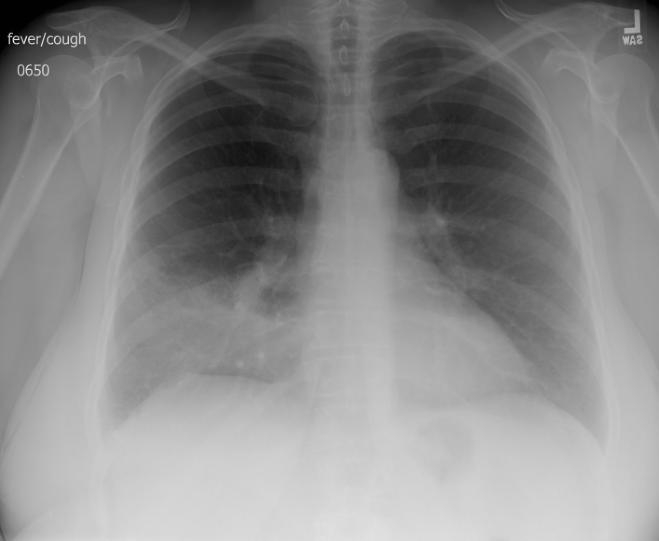
Previous chest x-ray performed at the time of the patient's breast cancer diagnosis was unremarkable, and echocardiography revealed a normal left ventricular ejection fraction, evidence of diastolic dysfunction, and no significant valvular abnormalities.
This patient would most likely respond to which of the following therapies?
A) Doxycycline
B) Furosemide
C) Prednisone
D) Trimethoprim-sulfamethoxazole
E) Voriconazole
Correct Answer:

Verified
Q687: A 28-year-old primigravid woman at 20 weeks
Q688: A 23-year-old man comes to the physician
Q689: A 43-year-old woman is being evaluated for
Q690: A 66-year-old man comes to the office
Q691: A 53-year-old woman comes to the physician
Q693: A 28-year-old African American woman returns to
Q694: A 33-year-old life-long asthmatic comes to the
Q695: A 55-year-old war veteran comes to the
Q696: A 44-year-old man comes to the physician
Q697: A 64-year-old woman comes to the office
Unlock this Answer For Free Now!
View this answer and more for free by performing one of the following actions

Scan the QR code to install the App and get 2 free unlocks

Unlock quizzes for free by uploading documents