A 70-year-old man comes to the physician due to generalized weakness and headaches. He has also had intermittent episodes of blurry vision and a 6.8-kg (15-lb) weight loss over the past 3 months. His other medical problems include hypertension, congestive heart failure, type 2 diabetes mellitus, and hypercholesterolemia. The patient underwent coronary artery bypass surgery for triple-vessel disease 4 years ago. His medications include insulin detemir, ramipril, simvastatin, low-dose aspirin, metoprolol, furosemide, and naproxen as needed for headaches.
The patient's temperature is 37.2 C (99 F) , blood pressure is 140/90 mm Hg, and pulse is 73/min. Eye examination is normal. He has decreased breath sounds at the left lung base. The liver edge is palpable at the costal margin. There is no adenopathy. There is trace peripheral edema bilaterally. The prostate is mildly enlarged, soft, and nontender on rectal examination. Fecal occult blood testing is negative.
Laboratory results are as follows: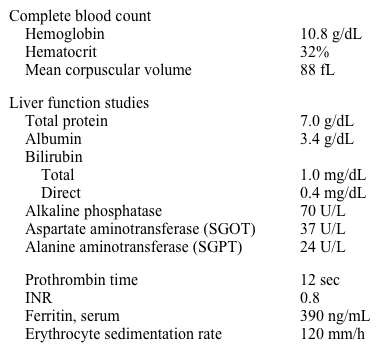
Chest x-ray reveals cardiomegaly and a left-sided pleural effusion <1 cm. Which of the following is the most appropriate next step in management of this patient?
A) Glucocorticoids
B) Hemochromatosis gene testing
C) Prostate-specific antigen test and bone scan
D) Thoracentesis
E) Triple-phase abdominal CT
Correct Answer:

Verified
Q798: A 58-year-old man with a history of
Q799: A 58-year-old man with type 2 diabetes
Q800: A 40-year-old man with end-stage renal disease
Q801: A 63-year-old woman comes to the office
Q802: A 71-year-old woman comes to the physician
Q804: A 60-year-old woman comes to the office
Q805: A 63-year-old man, who was diagnosed with
Q806: A 57-year-old woman comes to the physician
Q807: 43-year-old attorney comes to the office because
Q808: A 72-year-old woman comes to the physician
Unlock this Answer For Free Now!
View this answer and more for free by performing one of the following actions

Scan the QR code to install the App and get 2 free unlocks

Unlock quizzes for free by uploading documents