A 48-year-old man comes to the office for intractable lower extremity bone pain. He has end-stage renal disease due to focal segmental glomerulosclerosis and has been on hemodialysis 3 times a week for the past 4 years. Approximately 3 months ago, adjustments in his medications and hemodialysis regimens were made after the patient was found to have high serum calcium, phosphorus, and parathyroid hormone levels; however, these adjustments did not lead to any significant improvements in laboratory values. Temperature is 36.9 C (98.4 F) , blood pressure is 190/100 mm Hg, and pulse is 88/min. Oral examination shows pallor of the mucous membranes. Lungs have decreased sounds at both bases. Cardiovascular examination shows a 2/6 systolic ejection murmur at the left upper sternal border and a palpable thrill over an arteriovenous fistula in the left forearm. Laboratory results are as follows: 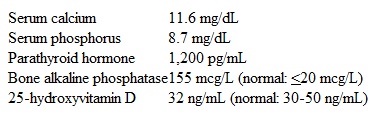 Chest x-ray reveals cardiomegaly with calcification of the ascending aorta. Which of the following treatments would be most beneficial for this patient's current condition?
A) Bisphosphonate
B) Intravenous hydration
C) Parathyroidectomy
D) Renal transplantation
E) Switching to peritoneal dialysis
Correct Answer:

Verified
Q638: A 55-year-old man comes to the office
Q639: A 46-year-old man comes to the office
Q640: A 26-year-old woman comes to the office
Q641: A 14-year-old boy is brought to the
Q642: A 76-year-old man is brought to the
Q644: A 35-year-old man comes to the office
Q645: You are the current "on call physician"
Q646: A 68-year-old man comes to the office
Q647: A 76-year-old female is seen in the
Q648: A 74-year-old woman is brought to the
Unlock this Answer For Free Now!
View this answer and more for free by performing one of the following actions

Scan the QR code to install the App and get 2 free unlocks

Unlock quizzes for free by uploading documents