A 65-year-old man comes to the office for a follow-up visit. His friend recently died from a massive cerebrovascular event. The patient is worried about his individual risk for stroke. Medical conditions include hypertension, type 2 diabetes mellitus, hypercholesterolemia, and obesity. He is an active smoker with a 40-pack-year history. The patient does not use alcohol or illicit drugs. Family history is not contributory. Medications include low-dose (81-mg) aspirin, metformin, lisinopril, and atorvastatin. Blood pressure is 161/92 mm Hg. BMI is 30 kg/m2. Examination shows no abnormalities. Laboratory results are as follows: 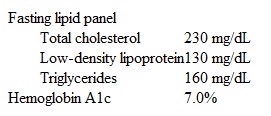 Which of the following would provide the greatest benefit for decreasing this patient's risk for an ischemic stroke?
A) Daily moderate alcohol intake
B) Daily fenofibrate therapy
C) Increased aspirin dose
D) Stricter blood pressure control
E) Stricter glucose control
Correct Answer:

Verified
Q700: A 68 year old male presents to
Q701: A 34-year-old, obese, Caucasian male presents to
Q702: A 78-year-old man is brought to the
Q703: A 78-year-old woman is brought to the
Q704: An 18-year-old man comes to the physician
Q706: An 18-year-old man comes to the physician
Q707: A 32-year-old Caucasian female presents to your
Q708: A 69-year-old woman underwent thyroidectomy due to
Q709: A 63-year-old woman is brought to the
Q710: An 18-year-old high school senior is brought
Unlock this Answer For Free Now!
View this answer and more for free by performing one of the following actions

Scan the QR code to install the App and get 2 free unlocks

Unlock quizzes for free by uploading documents