A 64-year-old man comes to the emergency department due to 2 days of nausea, vomiting, and abdominal distension. The patient has no abdominal pain. He has hypertension, hypercholesterolemia, coronary artery disease, and congestive heart failure. The patient also has chronic back pain due to a compression fracture 6 months ago. Medications include aspirin, oxycodone, furosemide, losartan, vitamin D, calcium gluconate, and simvastatin. Temperature is 36.7 C (98 F) , blood pressure is 130/70 mm Hg, and pulse is 92/min. The abdomen is distended but soft and nontender. There is no rebound tenderness or rigidity. Bowel sounds are decreased. There is 1+ peripheral edema. Laboratory results are as follows: 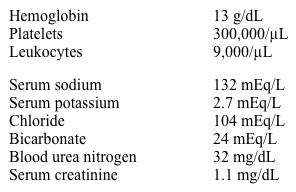 An electrocardiogram (ECG) shows normal sinus rhythm. Abdominal x-rays show diffuse bowel distension with a gas pattern in the colon and rectum. Which of the following is the most appropriate next step in management of this patient?
A) Intravenous antibiotics
B) Intravenous potassium
C) Methylnaltrexone
D) Spironolactone
E) Stat abdominal CT scan
Correct Answer:

Verified
Q989: A 42-year-old woman comes to the office
Q990: A 56-year-old man comes to the clinic
Q991: A 29-year-old woman, gravida 1 para 0,
Q992: A 42-year-old woman comes to the office
Q993: A 22-year-old man comes to the office
Q995: A 42-year-old woman comes to the office
Q996: A 74-year-old woman comes to the emergency
Q997: A 26-year-old woman comes to the office
Q998: A 66-year-old man comes to the clinic
Q999: An elderly male is brought to the
Unlock this Answer For Free Now!
View this answer and more for free by performing one of the following actions

Scan the QR code to install the App and get 2 free unlocks

Unlock quizzes for free by uploading documents