A 48-year-old man comes to the office due to progressive weakness for the past 2 months. The patient has experienced difficulty climbing stairs, especially when carrying heavy items such as groceries, and his symptoms have become progressively worse. He also reports occasional fevers, but no significant pain in the muscles or joints. The patient has had no diplopia, dyspnea, dysphagia, abdominal pain, or heat or cold intolerance. He has a history of hypertension and hyperlipidemia, for which he has taken losartan and atorvastatin, respectively, for the last 4 years. The patient does not use tobacco, alcohol, or illicit drugs. Temperature is 37.1 C (98.8 F) , blood pressure is 132/84 mm Hg, pulse is 72/min, and respirations are 14/min. He has no scleral icterus. Cardiopulmonary examination is normal. The abdomen is soft and nontender with no hepatosplenomegaly. Muscle strength is 3/5 in the deltoids and hip flexors but is otherwise normal. Deep tendon reflexes are normal and symmetric, and sensations to pain and light touch are intact. There is mild muscle tenderness and some of the small joints of both hands are tender to palpation without any swelling or erythema. He has no skin rash. Laboratory results are as follows: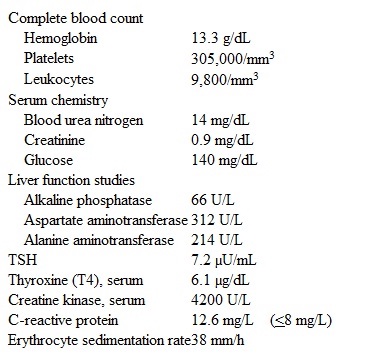 After confirmation of the diagnosis, the patient is started on appropriate therapy. During a follow-up visit 6 months later, he says the muscle weakness has improved but he becomes breathless on moderate exertion. The patient has to stop to catch his breath when walking 3 blocks to his office, which he had previously been able to do without stopping. He has also had a mild nonproductive cough. Temperature is 36.6 C (98 F) , blood pressure is 130/80 mm Hg, pulse is 82/min, and respirations are 16/min. The neck veins are flat. Heart sounds are normal, but lung auscultation reveals bibasilar fine crackles. Muscle strength is normal. Blood cell counts and serum chemistry are within normal limits. Chest radiograph is normal. Which of the following is the best next step in management of this patient?
A) Bronchoscopy
B) Echocardiography
C) Pulmonary function test
D) Serum IgE concentration
E) Ventilation/perfusion scan
Correct Answer:

Verified
Q1067: A 2-year-old girl is brought to the
Q1068: A 33-year-old Caucasian female presents to your
Q1069: A 45-year-old woman comes to the office
Q1070: A 29-year-old woman comes to the office
Q1071: A 12-year-old girl is brought to the
Q1073: A 27-year-old man comes to the physician
Q1074: A 12-year-old girl is brought to the
Q1075: A 25-year-old man comes to the emergency
Q1076: A 25-year-old man comes to the emergency
Q1077: A 55-year-old woman comes to the physician
Unlock this Answer For Free Now!
View this answer and more for free by performing one of the following actions

Scan the QR code to install the App and get 2 free unlocks

Unlock quizzes for free by uploading documents