A 65-year-old man is brought to the emergency department with a sudden onset of right-sided weakness and difficulty speaking that began one hour ago. His other medical problems include hypertension and hyperlipidemia. He has no history of stroke, myocardial infarction, recent trauma or surgery, or bleeding. He has smoked 2 packs of cigarettes daily for 30 years. His medications include hydrochlorothiazide, lisinopril, amlodipine, and simvastatin.
His temperature is 37.0 C (98.6 F) , blood pressure is 180/100 mm Hg, and pulse is 115/min. On neurological examination, he is awake and alert. He has significant expressive aphasia and difficulty with repetition. He has right-sided hemiparesis (arm > leg) and numbness. His reflexes are increased on the right with an extensor plantar response.
His EKG shows an irregularly irregular rhythm and nonspecific T wave changes.
Laboratory results are as follows: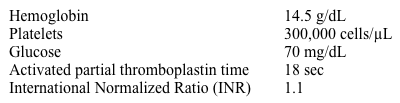
A head CT is negative for hemorrhage. After initial evaluation, he is treated with intravenous tPA.
Which of the following is the most important step in the management of this patient within the next 24 hours?
A) Amiodarone for atrial fibrillation
B) Antiplatelet therapy with aspirin
C) Early enteral feeding
D) Full anticoagulation with intravenous heparin
E) Labetalol to keep systolic blood pressure < 180 mm Hg
Correct Answer:

Verified
Q121: A 45-year-old woman is brought to the
Q122: A 34-year-old woman is brought to the
Q123: A 40-year-old man comes to the emergency
Q124: A 21-year-old woman comes to the emergency
Q125: A 65-year-old man comes to the emergency
Q127: A 65-year-old man is brought to the
Q128: A 60-year-old woman comes to the emergency
Q129: A 64-year-old man with a history of
Q130: A 48-year-old man comes to the emergency
Q131: A 60-year-old right-handed woman with a history
Unlock this Answer For Free Now!
View this answer and more for free by performing one of the following actions

Scan the QR code to install the App and get 2 free unlocks

Unlock quizzes for free by uploading documents