A 75-year-old woman comes to the emergency department for shortness of breath. Her family reports she has been having difficulty breathing for the last few nights. About an hour ago, the patient's condition suddenly deteriorated and she developed significant respiratory distress. She has had no fever or cough but has been out of her regular medications for a week. Medical history is significant for hypertension, coronary artery disease, and heart failure. Temperature is 36.7 C (98.1 F) , blood pressure is 205/110 mm Hg, pulse is 112/min, and respirations are 32/min. Pulse oximetry is 89% on high-flow oxygen. The patient is awake but in distress and able to speak only in 1-word sentences. Bilateral crackles and an S3 gallop are present. She has 3+ pitting edema in her bilateral lower extremities. Noninvasive positive pressure mechanical ventilation is initiated. The beneficial effects of positive pressure ventilation in this patient are most likely through which of the following physiologic changes?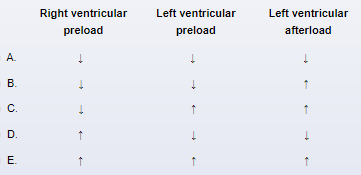
A) A
B) B
C) C
D) D
E) E
Correct Answer:

Verified
Q384: A 28-year-old man is brought to the
Q385: A 15-year-old boy is brought to the
Q386: A 22-year-old woman is brought to the
Q387: A 32-year-old woman comes to the emergency
Q388: A 67-year-old woman with a past medical
Q390: A 28-year-old woman comes to the emergency
Q391: A 42-year-old prison inmate is brought to
Q392: A 34-year-old man is brought to the
Q393: A 31-year-old woman is brought to the
Q394: A 26-year-old woman is brought to the
Unlock this Answer For Free Now!
View this answer and more for free by performing one of the following actions

Scan the QR code to install the App and get 2 free unlocks

Unlock quizzes for free by uploading documents