A 34-year-old man is brought to the emergency department with increasing shortness of breath and cough. The patient has a 10-year history of asthma and a hospitalization for exacerbation. His home medications include inhaled fluticasone and as-needed albuterol. The attack started 10 hours ago and did not respond to numerous albuterol inhalations at home. He does not use tobacco or illicit drugs. His temperature is 37 C (98.6 F) , blood pressure is 120/70 mm Hg, pulse is 110/min, and respirations are 28/min. Pulse oximetry shows 88% on room air. The patient is using accessory muscles of respiration and speaks with difficulty. Lung auscultation indicates decreased breath sounds, prolonged expiration, and bilateral diffuse wheezing. Cardiac examination shows normal heart sounds and no murmurs. Arterial blood gas results on room air are as follows: 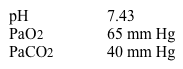 The chest x-ray reveals hyperinflated lungs. Which of the following findings is most concerning and indicates that the patient is getting worse?
A) Hypoxemia evident on arterial blood gas
B) Lung hyperinflation noted on chest x-ray
C) Normal PaCO2 on arterial blood gas
D) Tachycardia
E) Tachypnea
Correct Answer:

Verified
Q387: A 32-year-old woman comes to the emergency
Q388: A 67-year-old woman with a past medical
Q389: A 75-year-old woman comes to the emergency
Q390: A 28-year-old woman comes to the emergency
Q391: A 42-year-old prison inmate is brought to
Q393: A 31-year-old woman is brought to the
Q394: A 26-year-old woman is brought to the
Q395: A 64-year-old woman comes to the emergency
Q396: A 16-year-old girl is brought to the
Q397: A 23-year-old woman, gravida 1 para 0,
Unlock this Answer For Free Now!
View this answer and more for free by performing one of the following actions

Scan the QR code to install the App and get 2 free unlocks

Unlock quizzes for free by uploading documents