A 28-year-old woman comes to the emergency department due to persistent bilateral headaches. The patient was initially seen at an urgent care clinic for the same symptoms 4 weeks ago and had normal physical examination findings. The headache was attributed to a suspected upper respiratory illness, and ibuprofen as needed was advised. The headache has failed to improve, and now the patient also feels fatigued. She has had no fever, nausea, vomiting, cough, shortness of breath, chest or abdominal pain, or diarrhea. The patient has no chronic medical conditions but says she sunburns easily. She does not use tobacco, alcohol, or illicit drugs. Temperature is 37.2 C (99 F) , blood pressure is 170/110 mm Hg, pulse is 82/min, and respirations are 14/min. Physical examination shows normal jugular venous pressure, clear lungs, normal heart sounds, and a nontender abdomen. There is 1+ pitting edema of the bilateral lower extremities. Laboratory results are as follows: 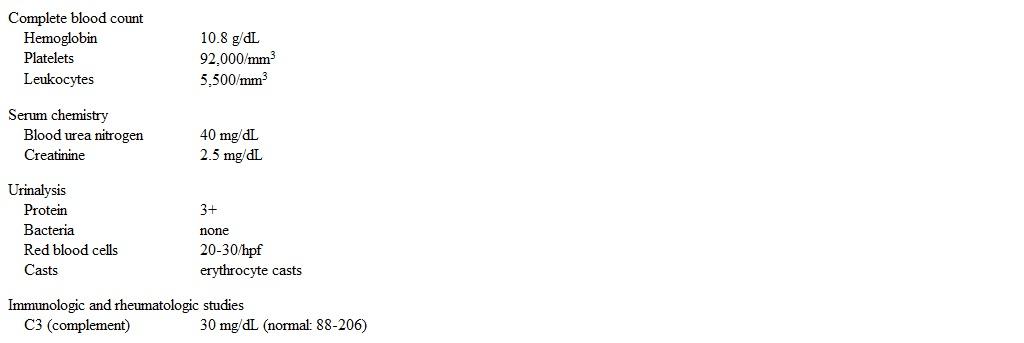 Which of the following is the most likely diagnosis?
A) Granulomatosis with angiitis
B) Hemolytic uremic syndrome
C) Hypertensive emergency
D) NSAID-induced interstitial nephritis
E) Poststreptococcal glomerulonephritis
F) Systemic lupus erythematosus
Correct Answer:

Verified
Q1519: A 60-year-old man is brought to the
Q1520: A 58-year-old man with a history of
Q1521: A 25-year-old woman comes to the physician
Q1522: A 31-year-old woman comes to the office
Q1523: A 15-year-old girl is brought to the
Q1525: A 66-year-old man comes to the office
Q1526: A 65-year-old woman is brought to the
Q1527: A 72-year-old man comes to the emergency
Q1528: A 52-year-old man comes to the clinic
Q1529: A 22-year-old man comes to the emergency
Unlock this Answer For Free Now!
View this answer and more for free by performing one of the following actions

Scan the QR code to install the App and get 2 free unlocks

Unlock quizzes for free by uploading documents