A 56-year-old man comes to the office for evaluation of diarrhea. He has had 6 or 7 loose, watery brown stools every day for the past 4 weeks as well as frequent nocturnal episodes while sleeping. The patient has no fever, hematochezia, melena, unexpected weight loss, or abdominal pain. He was discharged from the hospital 5 weeks ago after a protracted stay for emphysematous cholecystitis complicated by intraabdominal abscess, which required an emergency cholecystectomy and abscess drainage as well as broad-spectrum intravenous antibiotics. Medical history is significant for morbid obesity, hypertension, and hyperlipidemia. There has been no change in the patient's home medications. Temperature is 37.4 C (99.3 F) , blood pressure is 145/80 mm Hg, pulse is 80/min, and respirations are 13/min. Sclera are anicteric, and mucous membranes are moist. Surgical scars on the abdomen are well healed, and the abdomen is nontender and nondistended. Laboratory results are as follows: 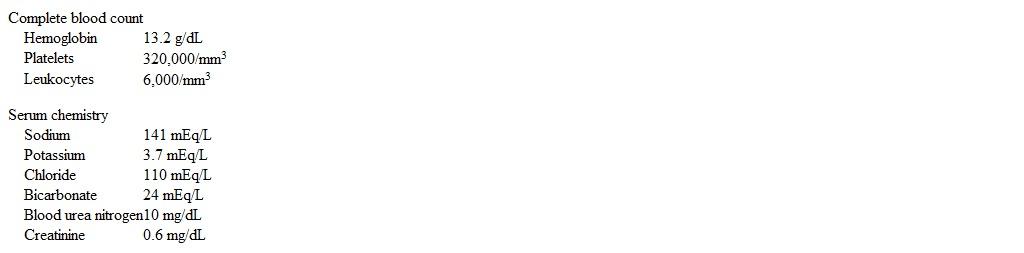 Stool is negative for occult blood and leukocytes. Test of the stool for Clostridioides difficile toxin is negative. Erythrocyte sedimentation rate is normal. What is the most appropriate next step in management of this patient?
A) Budesonide
B) Cholestyramine
C) Lactose-free diet
D) Oral vancomycin
E) Pancreatic enzyme replacement therapy
F) Sulfasalazine
Correct Answer:

Verified
Q317: A 63-year-old man comes to the emergency
Q318: A 24-year-old man comes to the emergency
Q319: A 12-year-old girl is brought to the
Q320: A 36-year-old woman comes to the office
Q321: A 75-year-old woman comes to the emergency
Q323: A 74-year-old man is brought to the
Q324: A 54-year-old man comes to the office
Q325: A 34-year-old woman is in the Intensive
Q326: A 72-year-old man comes to the office
Q327: A 67-year-old man comes to the office
Unlock this Answer For Free Now!
View this answer and more for free by performing one of the following actions

Scan the QR code to install the App and get 2 free unlocks

Unlock quizzes for free by uploading documents