A 72-year-old man is brought to the emergency department after an episode of syncope during a family gathering. The patient was sitting in his chair after dinner and passed out briefly. There are no apparent injuries and no seizure-like activity was observed. His granddaughter says that he has had frequent episodes of dizziness in the last 2 weeks. These episodes are sometimes accompanied by confusion and are not related to physical activity or changes in position. The patient's other medical problems include coronary artery disease and hypertension. He does not use alcohol or tobacco. His medications include aspirin, lisinopril, atorvastatin, and isosorbide mononitrate. Blood pressure is 105/60 mm Hg and respirations are 14/min. The patient is fully alert and oriented. Examination reveals no neck bruits. Lung fields are clear, and no cardiac murmurs are heard. Neurologic examination is within normal limits. ECG is shown in the exhibit. 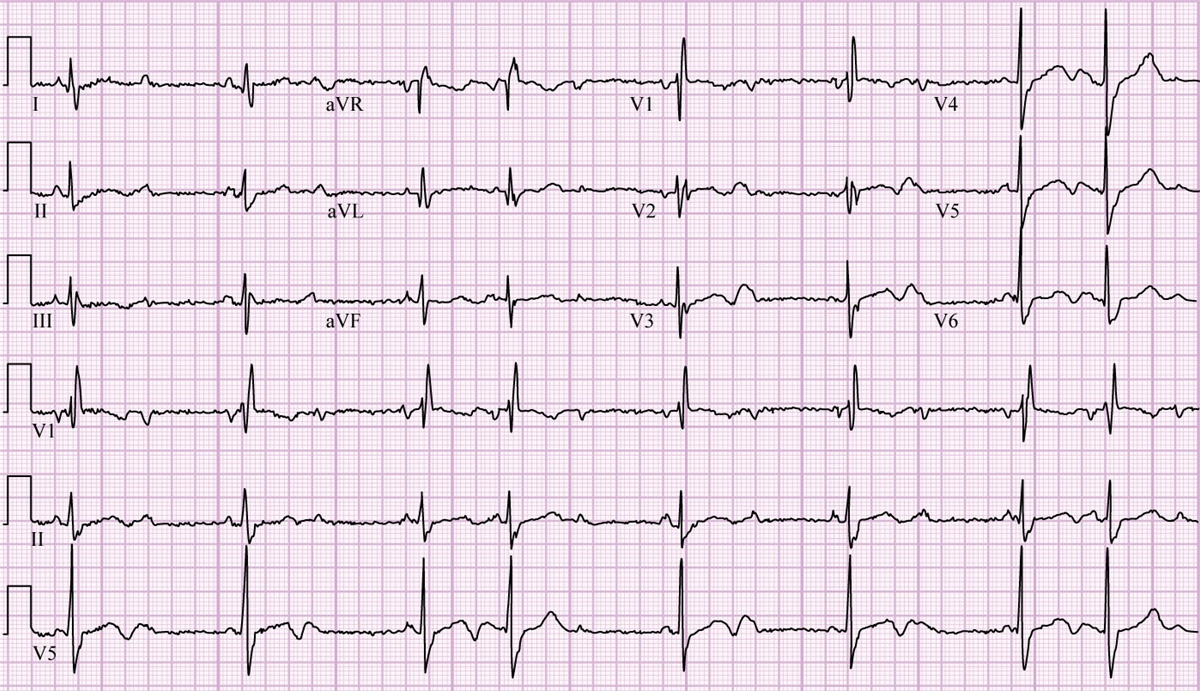 Serum potassium is 4.1 mEq/L and serum creatinine is 1.1 mg/dL. Which of the following is the best next step in management of this patient?
A) Arrangement for pacemaker
B) Diagnostic telemetry monitoring for 24-48 hours
C) Intravenous atropine
D) Stress testing for chronotropic competence
E) Stress testing for inducible ischemia
Correct Answer:

Verified
Q81: A 72-year-old man comes to the emergency
Q82: A 34-year-old woman comes to the office
Q83: A 44-year-old man comes to the office
Q84: A 70-year-old woman is brought to the
Q85: A 52-year-old woman comes to the emergency
Q87: An 8-year-old girl is brought to the
Q88: A 55-year-old woman comes to the office
Q89: A 72-year-old man comes to the emergency
Q90: A 28-year-old woman comes to the office
Q91: A 70-year-old woman is brought to the
Unlock this Answer For Free Now!
View this answer and more for free by performing one of the following actions

Scan the QR code to install the App and get 2 free unlocks

Unlock quizzes for free by uploading documents