Passage
The adrenal glands are divided into two anatomically distinct regions, the adrenal medulla and the adrenal cortex. The adrenal medulla is a collection of irregularly shaped cells located in the interior portion of each adrenal gland. In response to changing serum levels of corticosteroid hormones, medullary cells synthesize and secrete the catecholamines norepinephrine and epinephrine. Norepinephrine and epinephrine are water-soluble compounds, and their actual secretion into the bloodstream is stimulated by acetylcholine (ACh) -mediated signaling in the sympathetic component of the autonomic nervous system. Figure 1 shows the enzyme-mediated synthesis of norepinephrine and epinephrine.
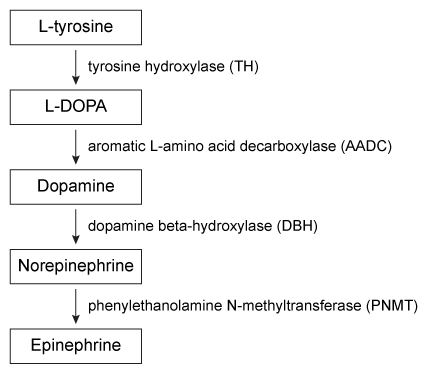 Figure 1The adrenal cortex is the outer portion of the adrenal gland and is composed of cells that synthesize and secrete lipophilic hormones derived from cholesterol. Hormones produced by the adrenal cortex include the principal glucocorticoid hormone (cortisol) and the mineralocorticoid hormone (aldosterone) .The hypothalamus and pituitary gland regulate and control the endocrine functions of the adrenal cortex (Figure 2) . Secretion of corticotrophin-releasing hormone (CRH) from the hypothalamus promotes the synthesis and release of adrenocorticotrophic hormone (ACTH) by the pituitary gland. ACTH acts on adrenal cortex cells to promote the growth of cortical tissue and to increase the synthesis and secretion of glucocorticoids. In addition to its body-wide functions as the principal stress hormone, cortisol also regulates adrenal activity by inhibiting CRH release from the hypothalamus and ACTH release from the pituitary.
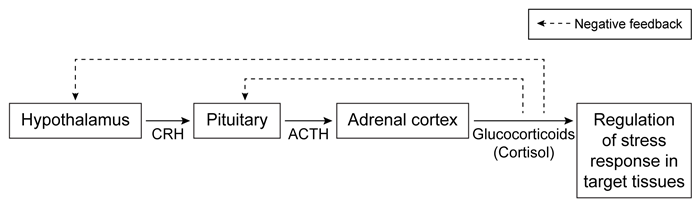 Figure 2
-Administration of a drug causes increased secretion of norepinephrine and epinephrine by the adrenal medulla. This most probably occurs because the drug:
A) increases secretion of ACTH.
B) inhibits production of TH and AADC.
C) mimics the activity of sympathetic neurons.
D) activates enzymes that mediate the breakdown of tyrosine derivatives.
Correct Answer:

Verified
Q229: Passage
The sex chromosomes X and Y are
Q230: Passage
Endometriosis is a chronic, treatable disease of
Q231: Passage
Bone remodeling is the continuous, microscopic process
Q232: Passage
The sex chromosomes X and Y are
Q233: Passage
Bone remodeling is the continuous, microscopic process
Q235: Passage
The adrenal glands are divided into two
Q236: Passage
Endometriosis is a chronic, treatable disease of
Q237: Passage
Endometriosis is a chronic, treatable disease of
Q238: Passage
Bone remodeling is the continuous, microscopic process
Q239: Passage
The adrenal glands are divided into two
Unlock this Answer For Free Now!
View this answer and more for free by performing one of the following actions

Scan the QR code to install the App and get 2 free unlocks

Unlock quizzes for free by uploading documents