Solved

Figure a Below Depicts the Demand and Supply of Japanese

Question 57

Multiple Choice

Figure A below depicts the demand and supply of Japanese yen in the foreign currency exchange market. Figure B below depicts the aggregate supply-aggregate demand model for the Japanese economy. Use these figures to answer the next two questions:
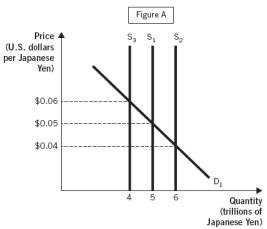
Figure A below depicts the demand and supply of Japanese yen in the foreign currency exchange market. Figure B below depicts the aggregate supply-aggregate demand model for the Japanese economy. Use these figures to answer the next two questions:        -Which of the following is the most accurate description of the phenomenon shown in Figure B? A)  The Japanese central bank increased the money supply S₁ to S₂, which caused the price level to fall from 115 to 110, which then caused the short-run aggregate supply to decrease from SRAS₁ to SRAS₂. B)  The Japanese central bank increased the money supply S₁ to S₂, which caused aggregate demand to increase from AD₁ to AD₂, which then caused the short-run aggregate supply to decrease from SRAS₁ to SRAS₂. C)  The Japanese central bank decreased the money supply S₁ to S₃, which caused aggregate demand to decrease from AD₂ to AD₁, which then caused the short-run aggregate supply to decrease from SRAS₁ to SRAS₂. D)  The Japanese central bank increased the money supply S₁ to S₂, which caused real gross domestic product (GDP)  to fall from Y₂ to Y₁, which caused the short-run aggregate supply to decrease from SRAS₁ to SRAS₂, which then caused aggregate demand to increase from AD₁ to AD₂. E)  Aggregate demand increased from AD₁ to AD₂, which forced the Japanese central bank to increase the money supply S₁ to S₂, which then caused the short-run aggregate supply to decrease from SRAS₁ to SRAS₂.
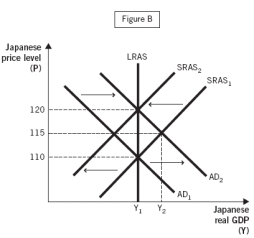
-Which of the following is the most accurate description of the phenomenon shown in Figure B?


A) The Japanese central bank increased the money supply S₁ to S₂, which caused the price level to fall from 115 to 110, which then caused the short-run aggregate supply to decrease from SRAS₁ to SRAS₂.
B) The Japanese central bank increased the money supply S₁ to S₂, which caused aggregate demand to increase from AD₁ to AD₂, which then caused the short-run aggregate supply to decrease from SRAS₁ to SRAS₂.
C) The Japanese central bank decreased the money supply S₁ to S₃, which caused aggregate demand to decrease from AD₂ to AD₁, which then caused the short-run aggregate supply to decrease from SRAS₁ to SRAS₂.
D) The Japanese central bank increased the money supply S₁ to S₂, which caused real gross domestic product (GDP) to fall from Y₂ to Y₁, which caused the short-run aggregate supply to decrease from SRAS₁ to SRAS₂, which then caused aggregate demand to increase from AD₁ to AD₂.
E) Aggregate demand increased from AD₁ to AD₂, which forced the Japanese central bank to increase the money supply S₁ to S₂, which then caused the short-run aggregate supply to decrease from SRAS₁ to SRAS₂.

Correct Answer:

verifed

Verified

Unlock this answer now
Get Access to more Verified Answers free of charge

Related Questions

Unlock this Answer For Free Now!

View this answer and more for free by performing one of the following actions

qr-code

Scan the QR code to install the App and get 2 free unlocks

upload documents

Unlock quizzes for free by uploading documents