Allergen-induced airway remodeling in mice is used as a model for human allergic asthma. This disease is induced by first sensitizing mice to the protein antigen, chicken ovalbumin (OVA) by intraperitoneal immunization with OVA in a TH2-inducing adjuvant. Three weeks later, mice are challenged by inhalation of aerosolized OVA (or saline alone, as a control) daily for the following three weeks. At the end of the entire six week period, the lungs of the mice are examined for leukocyte numbers in the bronchial alveolar lavage fluid (BALF) and for tissue remodeling as assessed by measuring fibrotic areas in the lung tissue. To determine the cell type most likely responsible for the tissue damage in this disease, IL-5 receptor-deficient mice (IL5R-/-) are compared to wild-type, as shown in Figure Q13) . 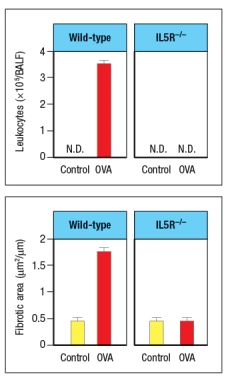 airway remodeling disease model is:
A) Neutrophils
B) Macrophages
C) Mast cells
D) TH2 cells
E) Eosinophils
Correct Answer:

Verified
Q9: In individuals with a peanut allergy, mild
Q10: The 'hygiene hypothesis' has been proposed as
Q11: NRF2 is a transcription factor that is
Q12: Within minutes after encounter with an allergen,
Q13: Studies using mouse models of allergic asthma
Q15: Common allergens that trigger atopic responses in
Q16: Genetic studies have identified more than 40
Q17: Genetic variations in proteins involved in immune
Q18: Red blood cells are common targets
Q19: Individuals with allergic responses to inhaled antigens
Unlock this Answer For Free Now!
View this answer and more for free by performing one of the following actions

Scan the QR code to install the App and get 2 free unlocks

Unlock quizzes for free by uploading documents