A 72-year-old man comes to the physician complaining of 2 weeks of muscle cramps and stiffness in his legs. He also feels fatigued and has to rest after walking several blocks. His past medical history is significant for coronary artery disease, type 2 diabetes mellitus, paroxysmal atrial fibrillation, and hyperlipidemia.
The patient underwent coronary revascularization with placement of 2 drug-eluting stents in his left anterior descending artery 6 months ago. His medications include metformin, low-dose-aspirin, clopidogrel, metoprolol, valsartan, and atorvastatin. He was recently started on amiodarone due to recurrent episodes of highly symptomatic atrial fibrillation.
The patient's blood pressure is 129/72 mm Hg and pulse is 65/min. His body mass index is 30 kg/m2. There is no muscle tenderness on physical examination. His muscle strength is 5/5 bilaterally and deep-tendon reflexes are 2+ and symmetrical bilaterally.
Laboratory results are as follows: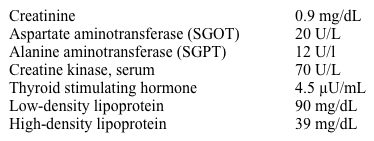
His atorvastatin is discontinued and his symptoms resolve completely within 4 weeks.
Which of the following is the best next step in management of this patient?
A) Avoid lipid-lowering therapy
B) Resume atorvastatin at a lower dose
C) Start ezetimibe
D) Start gemfibrozil
E) Start rosuvastatin
Correct Answer:

Verified
Q41: A 22-year-old man comes to the office
Q42: A 76-year-old woman comes to the office
Q43: A 68-year-old man comes to the physician
Q44: A 42-year-old man comes to the office
Q45: A 29-year-old woman comes to the physician
Q47: A 76-year-old man comes to the office
Q48: A 54-year-old man comes to the physician
Q49: A 35-year-old woman comes to the physician
Q50: A 54-year-old woman comes to the office
Q51: A 35-year-old woman comes to the office
Unlock this Answer For Free Now!
View this answer and more for free by performing one of the following actions

Scan the QR code to install the App and get 2 free unlocks

Unlock quizzes for free by uploading documents