A 43-year-old woman comes to the emergency department due to a 2-day history of nausea, vomiting, and epigastric pain. The pain is stabbing in character and radiates to her back. She also feels dizzy and weak but has not experienced shortness of breath, skin rash, constipation, abdominal trauma, headache, or fever. The patient's medical history is notable for hyperlipidemia and hypothyroidism, but she has not seen a physician in the past year. Current medications include levothyroxine, hydrochlorothiazide, and metoprolol. The patient has smoked a pack of cigarettes daily for 20 years and usually drinks 1 or 2 cans of beer a day, but she has been drinking more during the last few weeks due to a stressful relationship with her boyfriend.
Temperature is 37.2 C (99 F) , blood pressure is 90/60 mm Hg, pulse is 112/min, and respirations are 20/min. Oxygen saturation is 97% on room air. BMI is 30 kg/m2. On examination, the patient appears to be in moderate distress due to pain. Mucous membranes are dry. Abdominal examination shows epigastric tenderness with mild guarding. The liver is palpable 2 cm below the costal margin. There is no splenomegaly. The remainder of the physical examination is unremarkable.
Laboratory results are as follows: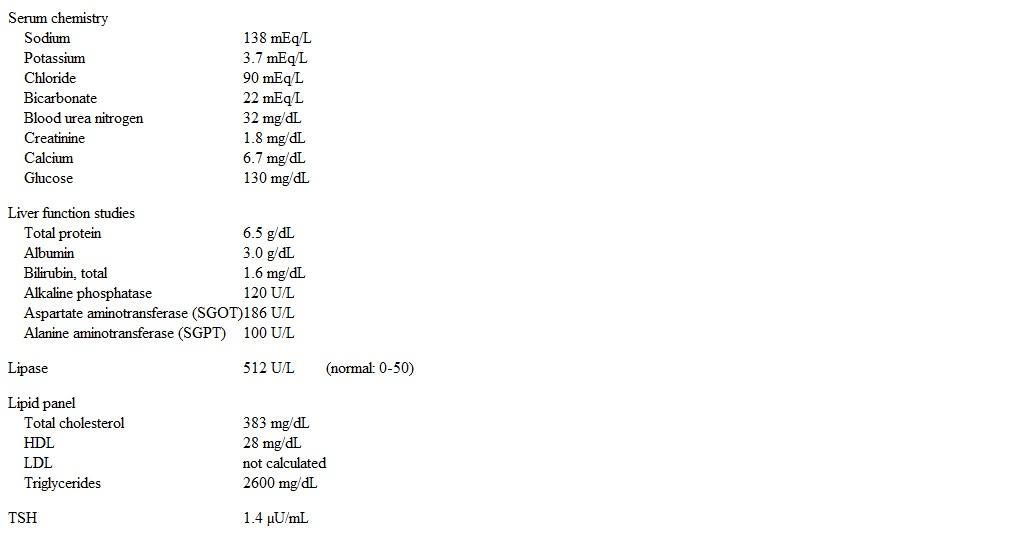 Abdominal radiograph is unremarkable. Abdominal ultrasound shows an enlarged, hypoechoic pancreas and a normal gallbladder. The common bile duct size is normal. The liver is enlarged and diffusely hyperechoic.
The patient's pain and blood pressure improve with intravenous fentanyl and a 1-L normal saline bolus.
Which of the following is the best additional therapy for this patient at this time?
A) Gemfibrozil
B) Heparin infusion
C) No additional therapy needed
D) Therapeutic plasma exchange
E) Ultrafiltration
Correct Answer:

Verified
Q232: A 52-year-old woman comes to the clinic
Q233: A 52-year-old man comes to the physician
Q234: A 47-year-old man comes to the physician
Q235: A 56-year-old woman with colon cancer diagnosed
Q236: A 26-year-old woman comes to the physician
Q238: A 51-year-old woman comes to the physician
Q239: A 46-year-old woman comes to the office
Q240: A 51-year-old woman comes to the office
Q241: A 34-year-old woman comes to the office
Q242: A 71-year-old man comes to the physician
Unlock this Answer For Free Now!
View this answer and more for free by performing one of the following actions

Scan the QR code to install the App and get 2 free unlocks

Unlock quizzes for free by uploading documents