A 39-year-old man with a history of chronic constipation comes to the physician with severe anal pain for the past 2 months. Bowel movements worsen the pain, and there is also persistent pain without stool passage. He reports a small amount of blood on the toilet paper after bowel movements. His family history is notable for irritable bowel syndrome in his mother and sister.
The patient's blood pressure is 138/78 mm Hg, pulse is 84/min, and respirations are 14/min. Physical examination shows a soft and nontender abdomen with normoactive bowel sounds. There is no hepatomegaly or splenomegaly. Rectal examination is limited due to significant pain on insertion of the finger and a tight anal sphincter. Small external hemorrhoids are noted.
Laboratory results are as follows: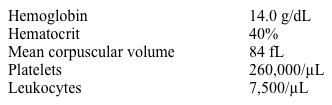
Colonoscopy is notable for moderate-size internal hemorrhoids, mild diverticulosis, and posterior anal fissure on external examination under sedation.
In addition to dietary modification and stool softeners, which of the following is the most appropriate next step in management?
A) Hydrocortisone cream
B) Lateral sphincterectomy
C) Nitroglycerin cream
D) Oral metronidazole
E) Rubber band ligation of hemorrhoids
Correct Answer:

Verified
Q371: A 36-year-old man with a 3-year history
Q372: A 63-year-old man comes to the physician
Q373: A 32-year-old woman comes to the office
Q374: A 53-year-old woman comes to the physician
Q375: A 22-year-old man comes to the physician
Q377: A 42-year-old woman from the Philippines comes
Q378: A 63-year-old man comes to the physician
Q379: A 29-year-old previously healthy man comes to
Q380: A 55-year-old man comes to the physician
Q381: A 38-year-old woman comes to the office
Unlock this Answer For Free Now!
View this answer and more for free by performing one of the following actions

Scan the QR code to install the App and get 2 free unlocks

Unlock quizzes for free by uploading documents